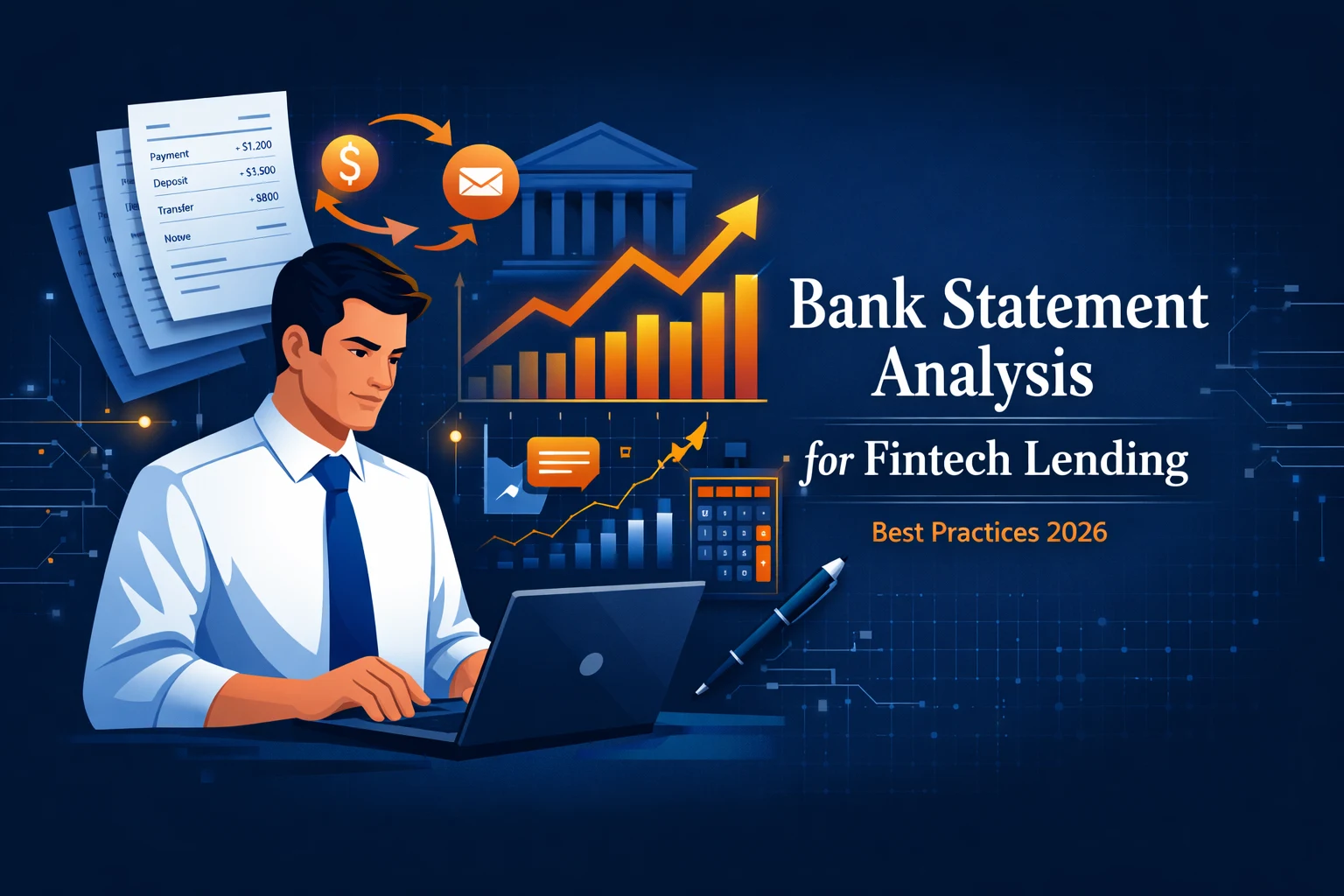
The fintech lending landscape is evolving at an unprecedented pace, and at the heart of this transformation lies a critical capability: bank statement analysis. As fintech companies and traditional lenders compete to capture market share, the ability to accurately interpret financial data has become a competitive differentiator. In 2026, sophisticated bank statement analysis has moved beyond manual spreadsheets and basic calculations—it’s now powered by AI, automation, and data intelligence that lenders depend on to make faster, smarter lending decisions.
Why Bank Statement Analyser Matters for Fintech Lending
Bank statements are financial documents that tell a complete story about a borrower’s financial health. For fintech lending platforms, bank statement analyser provides insights that traditional credit scoring models often miss. While credit scores offer a snapshot of past behaviour, bank statements reveal real-time spending patterns, income stability, cash flow trends, and behavioural indicators that directly correlate with repayment capacity.
The fintech lending sector has democratized access to credit, but this comes with its own risk management challenges. Unlike traditional banks with decades-old underwriting processes, fintech lenders need to make lending decisions faster—sometimes within minutes. Bank statement analysis serves as the backbone of rapid, yet reliable credit assessment, allowing platforms to approve or decline loans with confidence.
Core Components of Pro Analyser’s Bank Statement Analysis
1. Cash Flow Assessment
Understanding cash flow is fundamental in fintech lending. Lenders must evaluate:
- Monthly income consistency and sources
- Regular expenses and obligations
- Net available cash for loan repayment
- Seasonal variations in income
Fintech platforms now use advanced algorithms to identify income patterns automatically, flagging irregular deposits or unusual withdrawals that might indicate financial stress.
2. Income Verification & Stability
Verifying income through bank statements has become the gold standard in fintech lending because it’s difficult to manipulate. Pro Analyser’s bank statement analyzer examine:
- Salary deposits and their frequency
- Business income patterns
- Rental or investment income
- Government benefits or transfers
This verification process is critical when traditional proof of income (like salary slips) isn’t available, making it particularly valuable for self-employed borrowers and small business owners.
3. Debt Obligations & Repayment Capacity
Bank statements reveal every financial obligation EMI payments, rent, insurance premiums, loan installments, and more. By analyzing outgoing payments, fintech lenders can calculate the debt-to-income ratio and determine true repayment capacity. This is where many borrowers get rejected, not because of low income, but because their existing obligations are too high.
4. Spending Behavior & Financial Discipline
Bank statements paint a picture of how borrowers manage money. Do they overspend? Do they maintain emergency reserves? Are there signs of impulsive purchases? These behavioral indicators help lenders assess risk more accurately than traditional models.
Best Practices for Fintech Lending in 2026
Automate but Don’t Eliminate Human Judgment
While automation is critical for speed, fintech lending platforms must maintain human review for edge cases. An AI system might flag a borrower with low income as high-risk, but a human analyst might discover they recently inherited property or received a windfall payment. The combination of automated analysis and human oversight creates the most reliable decisions.
Implement Multi-Source Verification
Bank statement analysis should never be the sole basis for lending decisions. Fintech platforms should integrate multiple data sources:
- Tax returns (ITR documents)
- GST filings for business owners
- Employment verification
- Credit bureau reports
- Utility payments and rental history
This multi-layered approach reduces fraud risks and improves credit quality significantly. For deeper insights on how to conduct comprehensive credit assessments, explore how to conduct a credit assessment using bank statements, which provides a detailed roadmap for lenders.
Watch for Red Flags & Anomalies
Experienced fintech lenders understand that certain patterns indicate risk:
- Sudden large deposits followed by immediate withdrawals
- Frequent overdrafts or minimum balance warnings
- Missing or unexplained gaps in bank statements
- Multiple accounts being used simultaneously
- Deposit cycling (moving money between accounts)
Modern AI tools can detect these patterns in milliseconds, alerting analysts to potential fraud or financial instability.
Personalize Risk Assessment
Not all borrowers fit the same mold. A freelancer with irregular income might be perfectly reliable, while someone with stable salary might be overstretched. Fintech platforms should develop industry-specific and profile-specific risk models. Understanding how professionals use bank statements to predict borrower behaviour is essential. this detailed guide on how financial professionals use bank statements to predict borrower behaviour offers actionable insights for your lending operation.
Maintain Regulatory Compliance
Fintech lending is increasingly regulated. Platforms must ensure their bank statement analysis processes comply with:
- Anti-Money Laundering (AML) requirements
- Know Your Customer (KYC) norms
- Fair lending practices
- Data protection and privacy regulations
This is particularly important for platforms operating in India, where RBI guidelines for digital lending are becoming stricter.
Technology & Tools for Bank Statement Analysis
The best fintech platforms in 2026 leverage advanced technologies:
Optical Character Recognition (OCR): Automatically extracts data from PDF bank statements with 99%+ accuracy, eliminating manual data entry errors.
Machine Learning Algorithms: Identify patterns and anomalies that humans might miss, improving risk prediction accuracy.
Real-Time Data Integration: APIs connect directly to bank servers, providing instant access to current financial data rather than month-old statements.
Predictive Analytics: Models that forecast future cash flow and predict default probability based on historical patterns.
For a comprehensive understanding of modern tools available in the market, check out top bank statement analysis software for businesses explained, which reviews leading solutions built specifically for lending operations.
For more on emerging fintech trends and digital lending innovations, check out McKinsey’s Digital Banking Report which provides comprehensive industry insights.
The ROI of Effective Bank Statement Analysis
Fintech companies investing in robust bank statement analysis systems see measurable improvements:
- Faster decisions: Reducing loan approval time from days to hours or minutes
- Lower NPAs: Better risk assessment leads to fewer non-performing assets
- Expanded customer base: Ability to approve creditworthy borrowers who traditional banks reject
- Reduced operational costs: Automation eliminates manual review work
- Competitive advantage: Better credit quality allows for competitive interest rates
Looking Ahead: The Future of Fintech Lending
As we move deeper into 2026 and beyond, fintech lending will become increasingly driven by data intelligence. Bank statement analysis isn’t just about approval or rejection—it’s about understanding the complete financial picture and building products that work for diverse borrower profiles.
The next frontier involves integrating bank statement analyser with alternative data sources, using AI for even more nuanced risk assessment, and creating personalized loan products based on individual financial patterns. Platforms that master this will capture disproportionate market share in the rapidly growing fintech lending space.
Conclusion
Bank statement analysis has evolved from a compliance checkbox to a strategic competitive advantage in fintech lending. By implementing the best practices outlined in this guide automation with human oversight, multi-source verification, anomaly detection, and regulatory compliance fintech platforms can make faster, smarter lending decisions while managing risk effectively.
The fintech lending industry rewards those who can balance speed with accuracy, and modern bank statement analysis makes this balance achievable. Whether you’re a nascent fintech startup or an established lender looking to optimize your underwriting, investing in robust bank statement analysis capabilities should be a top priority.