Every loan application tells a story. And the clearest version of that story is written in the applicant’s bank statement.
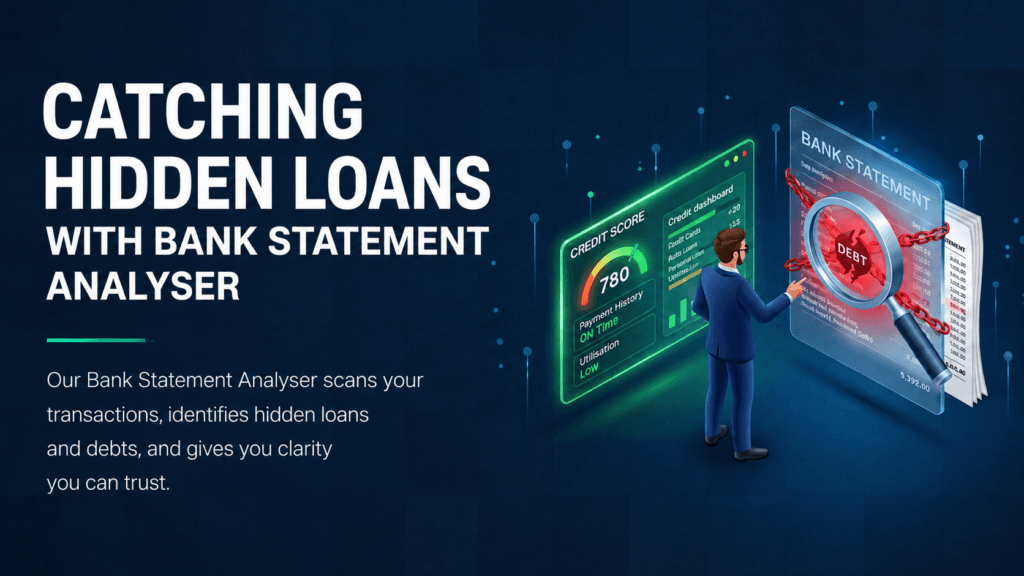
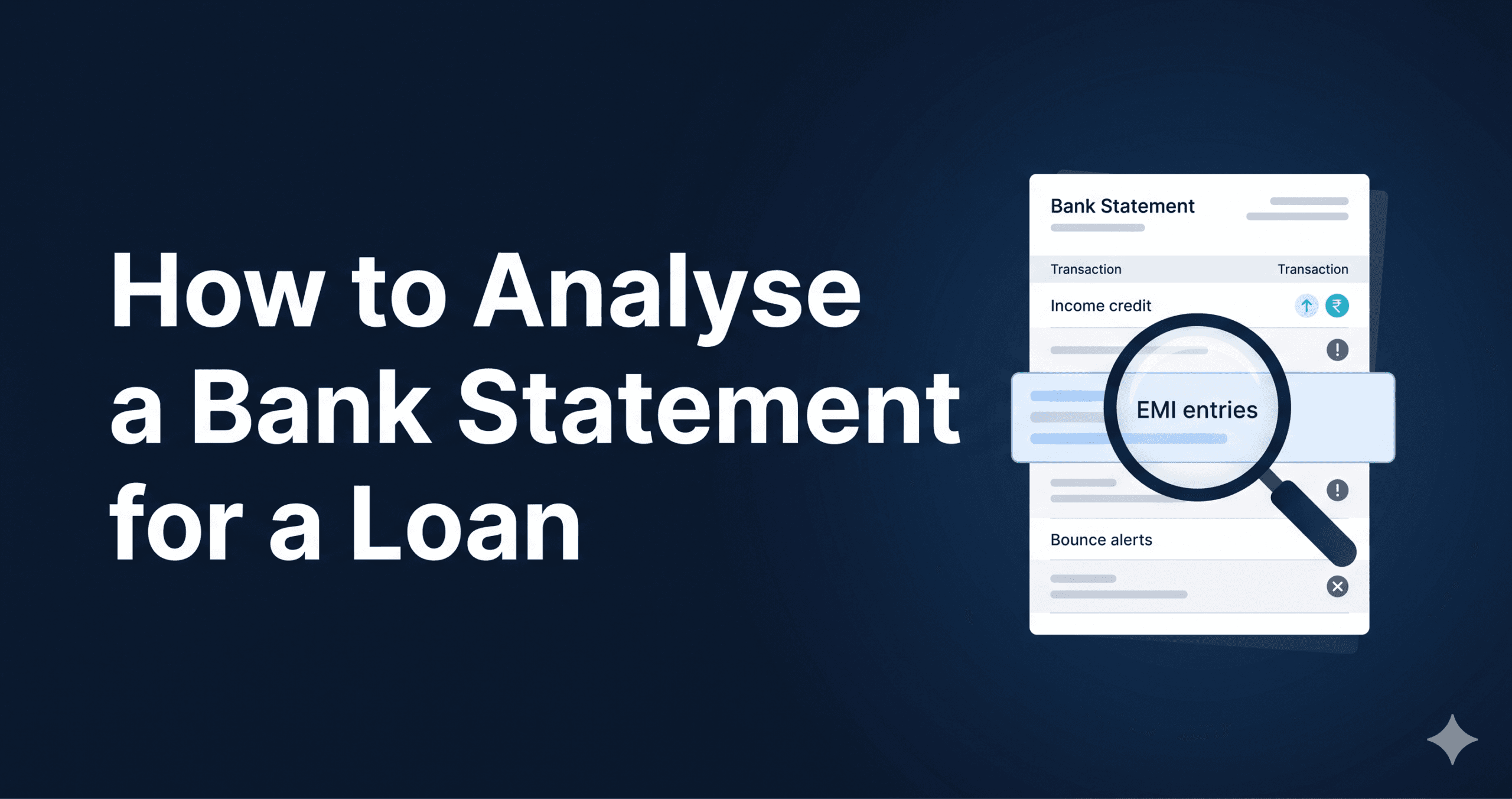
For NBFCs and DSAs, knowing how to analyse a bank statement for a loan is one of the most critical skills in the lending process. Done right, it reveals income patterns, existing obligations, and financial behaviour — all before a single rupee is disbursed. According to the RBI’s guidelines on credit risk assessment, thorough income and cash flow verification is a cornerstone of responsible lending.
But manual review is slow. It’s prone to errors. And with high volumes of applications, even experienced analysts miss things.
This guide breaks down exactly what to look for — step by step — so your team can make faster, more confident lending decisions.
What Does a Bank Statement Tell a Lender?
A bank statement is more than a list of transactions. It’s a financial fingerprint.
When analysed correctly, a 3–6 month statement can tell you:
- How regularly income is credited — and from how many sources
- Whether the applicant has existing loan obligations or EMIs
- The average monthly balance (AMB) maintained over time
- Whether cash flow is consistent or erratic
- If there are any signs of financial stress or unusual activity
Income verification from a bank statement is far more reliable than salary slips alone. It shows actual financial behaviour, not just declared figures.
📌 If you want to explore how income verification works in practice, check out our blog on Income Verification: Fast, Secure Lending with Bank Statements.
Key Parameters to Check When Analysing a Bank Statement for a Loan
Here’s what every NBFC and DSA should be examining:
1. Monthly Income Credits
Look for consistent credit entries each month. Is the salary or business income hitting the account on roughly the same dates? Are there multiple income sources? Irregular or missing credits are an immediate yellow flag.
2. EMI Obligations and Bounce Rate
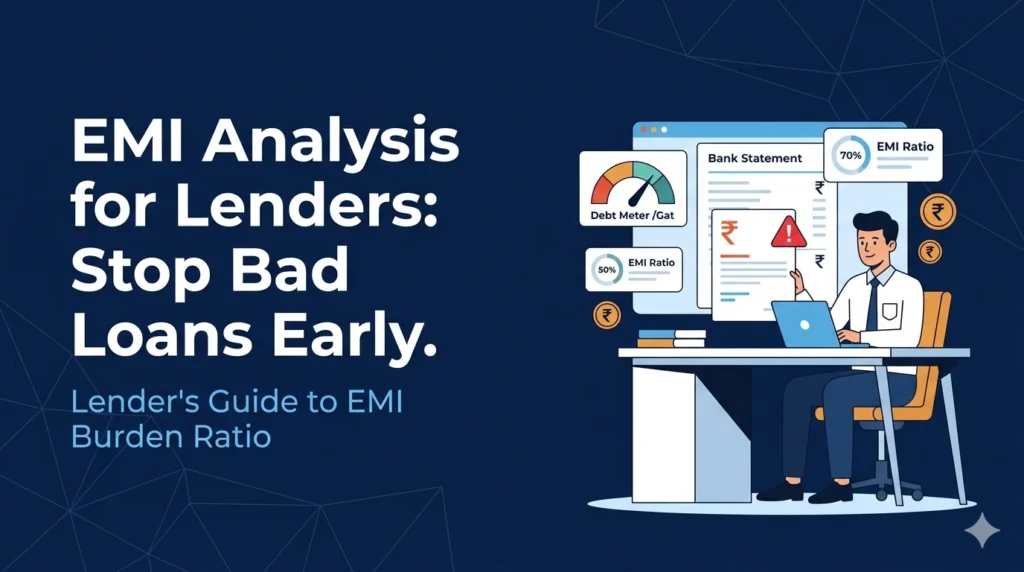
Scan for recurring debit entries that look like EMI payments. Then check for bounces. Even one or two EMI bounce entries in three months is a significant red flag. High bounce rates signal cash flow problems and increase default risk considerably.
3. Average Monthly Balance (AMB)
The AMB tells you the cushion an applicant maintains. A consistently low AMB — especially one that drops near zero at month end — suggests the applicant is living paycheck to paycheck. For loan repayment capacity, this is a key concern.
4. Irregular or Suspicious Transactions
Watch for large, unexplained credits just before a loan application. Also look for repetitive round-figure cash deposits, which may indicate undisclosed liabilities or inflated income. These patterns warrant deeper scrutiny before proceeding.
👉 Spend less time on manual checks. Explore Pro Analyser’s bank statement analyser to automatically flag EMI bounces, calculate AMB, and surface suspicious transactions — in seconds. Try it now!
📌 For a deeper look at how NBFCs use these parameters in practice, read our blog on Bank Statement Analysis for NBFCs.
Common Red Flags to Watch Out For
Even experienced lenders can overlook subtle warning signs during manual review. Here are the most common bank statement red flags in loan underwriting:
- Frequent EMI bounces or return charges in the last 90 days
- Sudden large credits appearing 1–2 months before loan application (possible round-tripping)
- Multiple cash deposits of similar amounts — a classic sign of inflated reported income
- Overdrawn balance or negative closing balance on multiple dates
- Minimal transaction history despite claimed business activity
Catching these early protects your NBFC from high-risk disbursals. Investopedia’s overview of credit risk in lending highlights how early detection of financial irregularities is directly linked to lower default rates.
📌 Want to go deeper on spotting fraud before it costs you? Read our blog on How to Prevent Loan Fraud with Smart Bank Statement Analysis.
Manual Analysis vs Automated Bank Statement Analysis — Which Is Better?
Manual analysis works. But it doesn’t scale.
When you’re processing dozens of applications a day, manually checking each statement for income credits, EMI bounces, AMB, and suspicious transactions takes hours. Errors creep in. Analysts get fatigued. Turnaround times suffer.
Automated bank statement analysis tools solve this by instantly extracting and categorising every transaction, calculating AMB, flagging bounces, and generating a structured report — in seconds. For NBFCs and DSAs processing high volumes, this isn’t just a convenience. It’s a competitive advantage.
👉 Get actionable lending insights with Pro Analyser’s bank statement analyzer — built for high-volume NBFCs and DSAs who need precision at speed. Get started today!
Final Thoughts
Knowing how to analyse a bank statement for a loan isn’t just a technical skill — it’s how good lenders protect their portfolios and serve their customers better.
To recap, the five things to always check:
- Consistency of monthly income credits
- EMI obligations and bounce frequency
- Average monthly balance over 3–6 months
- Unusual or suspicious transaction patterns
- Overall cash flow health
👉 If your team is spending too much time on manual reviews, it’s time to simplify. Explore Pro Analyser’s bank statement analyser — purpose-built for NBFCs, DSAs, and lending professionals who need speed without compromising accuracy. Start today!