Most finance teams manage cash flow by looking through a rear-view mirror. You track what was spent, reconcile what came in, and hope the delta remains positive. But in a volatile market, looking backward isn’t enough.
True financial leadership requires a windshield.
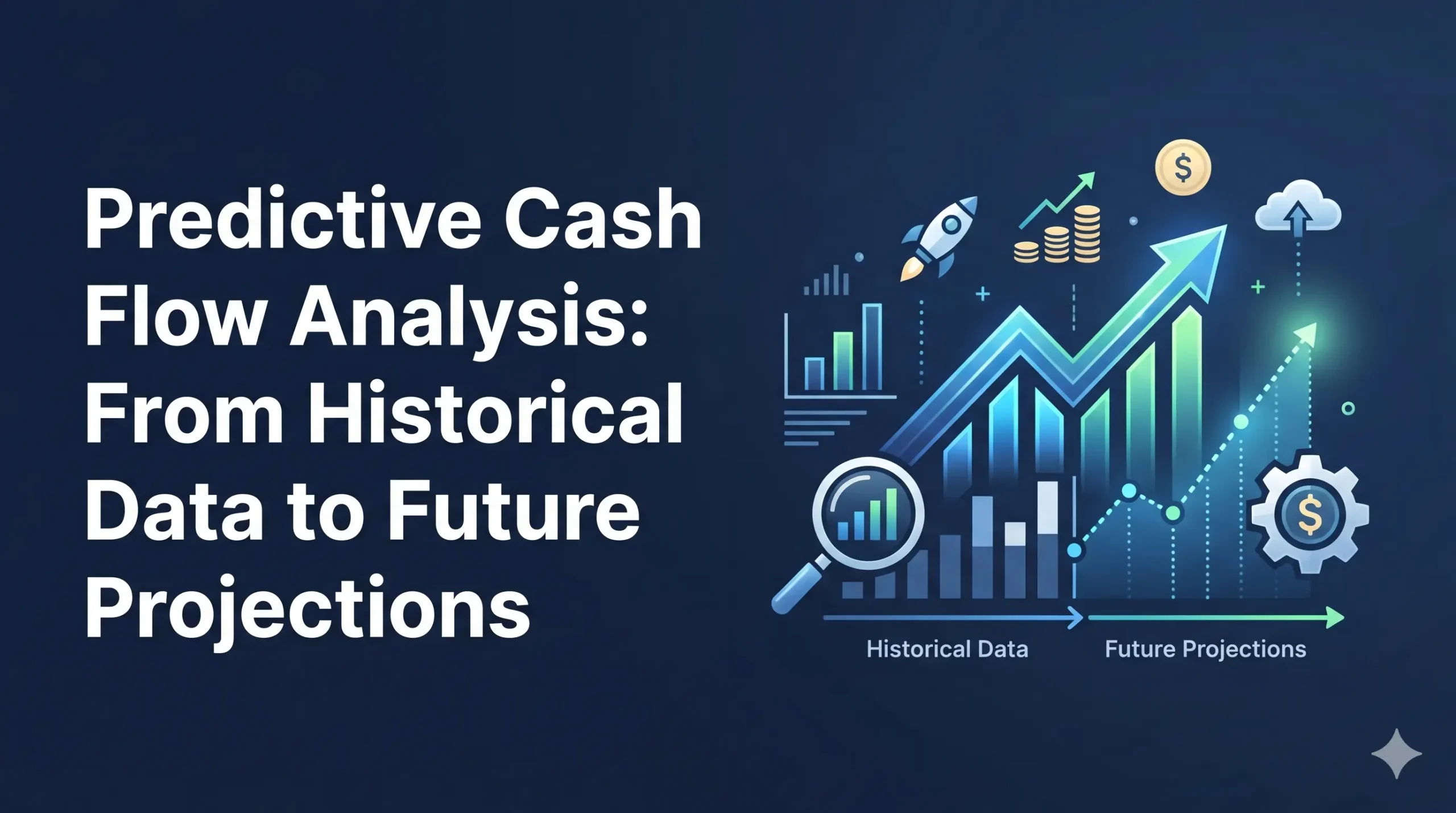
Transitioning from static tracking to cash flow forecasting allows you to move from a defensive posture to a strategic one. By leveraging predictive cash flow analysis, you transform historical data into a roadmap for future growth, ensuring your business runway is both visible and secure.
The Foundation: Transforming Historical Data
You cannot project the future if you don’t understand the past. However, historical data is only useful if it is clean and contextualized. According to Investopedia, cash flow is the net amount of cash and cash-equivalents being transferred into and out of a business, and its predictability is the cornerstone of solvency.
Cleaning the Source
Predictive modeling fails when built on “noisy” data. To get an accurate baseline, you must strip away one-off anomalies—such as a unique legal settlement—that won’t recur. Accurate forecasting requires a sanitized view of your standard operating reality.
👉 Simplify your financial review and get started with our Bank Statement Analysis tool today.
Identifying Patterns
Beyond the totals, look for the rhythm. Identify your seasonal peaks and troughs. Analyze your Accounts Receivable (AR) aging to see not just when clients are billed, but the actual velocity of cash hitting your accounts. This historical variance is the most critical variable in your future confidence intervals.
If you want to explore this further, check out our guide on how to automate financial data extraction to ensure your patterns are based on precise numbers.
4 Steps to Build a Predictive Model
Moving from a spreadsheet to a predictive engine doesn’t happen overnight. Follow this four-step framework to tighten your projections:
- Data Centralization: Stop relying on manual exports. Pull real-time data directly from your ERP and banking APIs.
- Variable Assessment: Integrate your sales pipeline probability. Don’t just project “closed” deals; weigh your top-of-funnel leads against historical conversion rates to account for market volatility.
- The Rolling Forecast: Static annual budgets are often obsolete by February. Adopt a 13-week rolling model to adjust for real-world changes.
- Scenario Stress-Testing: Build “Downside,” “Baseline,” and “Aggressive Growth” scenarios. What happens to your liquidity if a major contract is delayed by 60 days?
To see how this works in practice, read our blog on improving credit assessment accuracy for better risk management.
👉 Ready to transform your data? Explore how a Bank statement analyser can speed up your forecasting—Try it now!
Bridging the Gap: Working Capital & Liquidity
Predictive analysis isn’t just about survival; it’s about working capital optimization. When you have high confidence in your inflows, you can time your outflows more aggressively. You can decide exactly when to scale your headcount or when to bulk-purchase inventory to hedge against inflation.
This level of liquidity management builds immense investor and stakeholder confidence. As noted in recent Statista reports on corporate finance trends, companies with high cash visibility are significantly more resilient during economic downturns. It proves that the business isn’t just reacting to the market—it is funded for the future.
For more insights on managing business health, check out our article on financial health indicators for SMEs.
Conclusion: Proactive Financial Leadership
In the world of B2B and SaaS, cash is often the only constraint on speed. By mastering cash flow forecasting, you turn cash from a source of anxiety into a competitive advantage.
Don’t wait for the next quarterly review to find out where your cash went. Start by auditing your last two quarters of historical data today. Identify the gaps, build your first rolling 13-week model, and start leading your organization with a clear view of the road ahead.
👉 Want to see how our Bank statement analyser can simplify your workflow? Try it now!