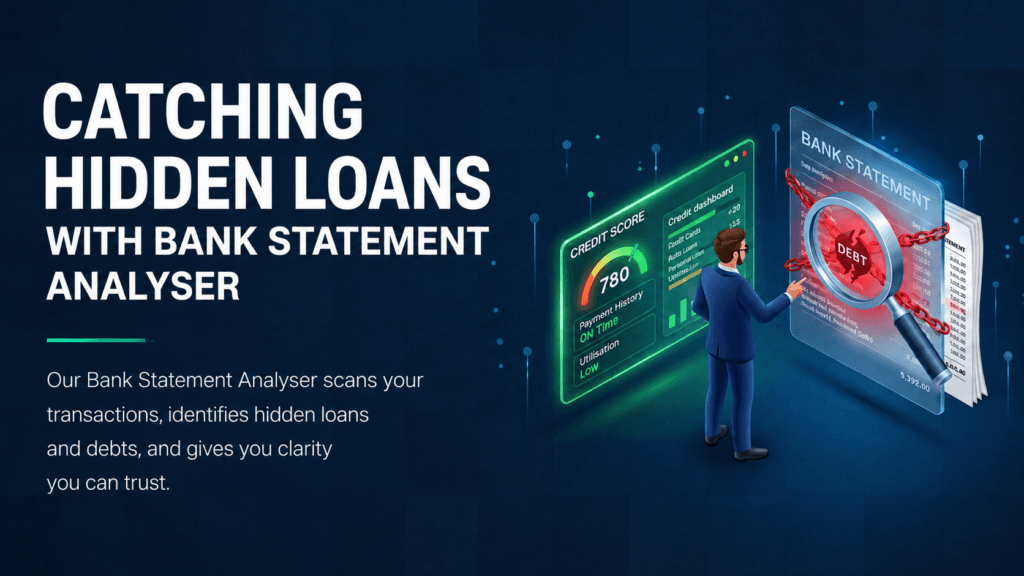
Catching hidden loans before they become NPAs is one of the biggest challenges in modern credit underwriting. Imagine this: You have an application from a seemingly perfect borrower — high income, good job stability, and a decent credit score according to the major bureaus. You approve the loan based on your standard eligibility assessment. Three months later, they start missing payments. What went wrong?
Catching hidden loans early requires going beyond Credit bureau data. These are hidden loan obligations that the borrower did not mention in their application and do not yet appear on their credit report due to reporting delays or because they are informal loans. For NBFC lending and digital lending institutions where speed is the priority, missing these signs can be catastrophic for portfolio health.
According to data on Non-Performing Assets (NPAs) monitored by the Reserve Bank of India (RBI), aggressive lending without proper verification is a primary driver of portfolio stress.
This is where our advanced financial tool becomes your most vital tool. A credit bureau report tells you about a borrower’s past credit behavior. A bank statement tells you about their present financial reality.
Why Catching hidden loans matters: The undisclosed liabilities are a nightmare
In credit underwriting, your primary job is to assess the borrower’s ability and willingness to repay. Undisclosed liabilities completely distort this assessment.
When a borrower conceals existing debt, your calculation of their free cash flow is wrong. Lenders need a robust process to Analyse Bank Statements for Loan Approval to get the full picture.
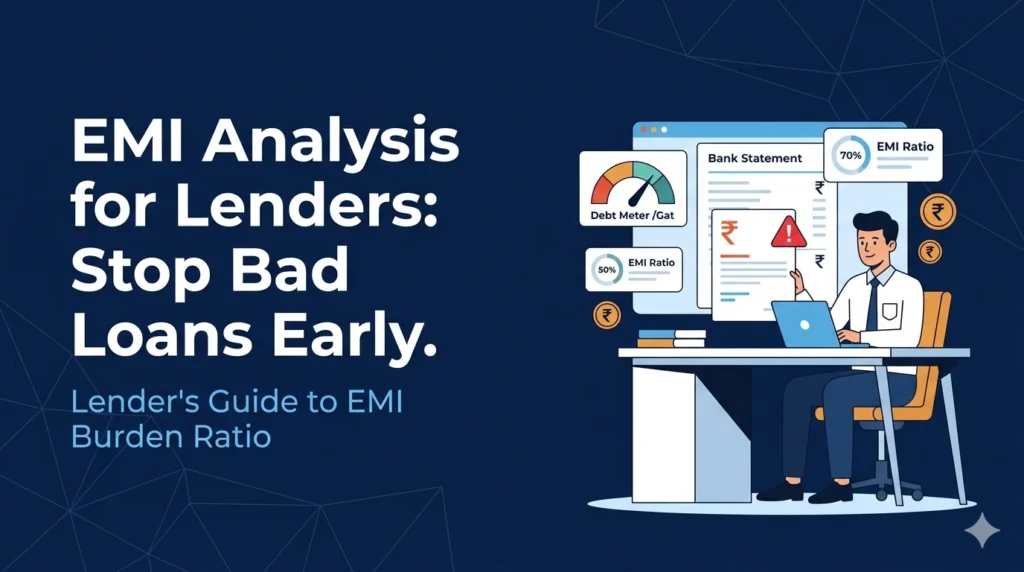
The Risk Scenario: A borrower might have a verified salary of ₹1,00,000. You approve an EMI of ₹30,000, thinking they can comfortably manage. However, if they have hidden EMIs worth ₹40,000 already running, their actual EMI Burden Ratio‘s now unsustainably high at 70%.
This creates immediate overleveraging, drastically increasing the probability of default and complicating accurate loan risk assessment.
👉 Detect borrower risks faster with our advanced Bank Statement Analyser. Explore it today.
5 Red Flags for Catching Hidden Loans in Bank Statements
A well-structured Bank Statement Review reveals critical, real-time information that a standard bureau report misses. Here are five specific red flags underwriters and risk teams must look for:
1. Regular, Fixed Debits to Other Financial Institutions
This is the most obvious sign. Even if a loan does not appear in the bureau record yet, recurring fixed amounts debited monthly (often via NACH or ECS mandates) are almost always EMIs. An automated system excels at this existing EMI detection by categorizing transaction narration patterns instantly.
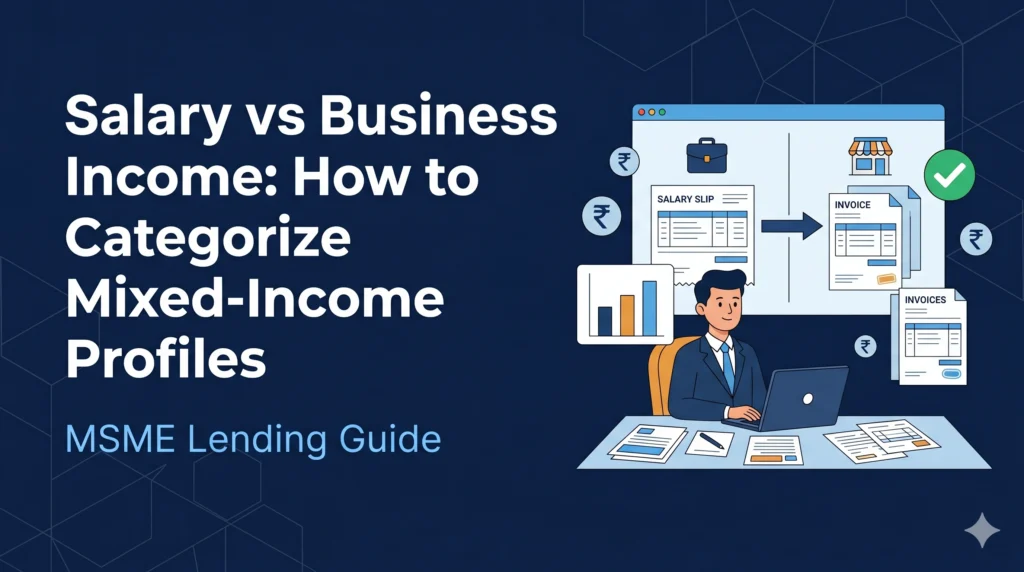
Understanding the nuance of Salary vs Business Income during categorization is vital here to ensure you aren’t misclassifying regular debits as business expenses when they are actually personal loan obligations.
2. “Loan” or “Advance” Keywords in Inward Transactions
Underwriters must check large inward transactions that are not clearly salary or business revenue. If the narration reads “Loan Disbursal,” “Advance,” or includes the name of another fintech lender, the borrower is actively taking on new debt simultaneously.
3. Multiple Lender Enquiries via Small Mandate Debits
A sudden flurry of small debit transactions (often ₹1 or ₹10) from different NBFCs usually indicates NACH mandate verification. This is a massive warning sign of “loan stacking”—where the borrower is trying to secure loans from multiple places at once before any of them register on their credit report.
4. Frequent P2P or Direct Transfers to Individuals on Fixed Dates
Not all liabilities are institutional. Regular, monthly transfers to the same individual accounts—often right after salary day—frequently indicate informal or peer-to-peer (P2P) loans. Automated tools help separate these from standard peer transfers by identifying fixed-date cyclicality.
5. High Frequency of NACH or Standing Instruction (SI) Bounce Charges
If a bank statement shows multiple penalty charges for failed Auto-Debits or NACH bounces, it means the borrower is struggling to juggle multiple hidden financial obligations. They are already choosing which lender to pay and which to skip, making them an extremely high-risk profile.
From Manual to Automated: The Technological Solution
Detecting these hidden financial nuances manually is incredibly time-consuming. In an era of instant digital approvals, you cannot afford to have loan officers spend hours squinting at dense PDFs. Furthermore, manual review is highly vulnerable to fraudulent, tampered bank statements.
👉 Simplify underwriting decisions with automated Bank Statement Analysis. Get Started Now.
This is why top-tier lenders have shifted to automated underwriting platforms. An automated bank statement analysis can ingest e-statements, deploy document DNA tracking to detect tampering, categorize thousands of transactions in seconds, and automatically flag all signs of undisclosed liabilities.
Final Thoughts on Catching Hidden Loans via Bank Statement Analysis
Catching hidden loans systematically is now a non-negotiable part of responsible lending. an honest look at a borrower’s financial obligations. Undisclosed liabilities are a hidden friction point that can quietly destroy a lender’s profitability. While credit bureaus are essential, they are no longer infallible on their own.
By integrating robust, automated Bank Statement Analysis into your credit underwriting workflow, you eliminate the guesswork. You gain a real-time, accurate picture of a borrower’s financial position, leading to better credit decision-making, reduced default rates, and sustained growth.
👉 Protect your portfolio from hidden debt. Contact us to schedule a demo or Signup and start using our Free Trial.
FAQ (Frequently Asked Questions)
Question: What are undisclosed liabilities in lending?
Answer: Undisclosed liabilities are existing debts or loan obligations that a borrower holds but fails to declare on a new loan application. These are often missing from credit bureau reports due to reporting lags, recent approval cycles, or informal lending sources.
Question: Why don’t credit bureaus show all liabilities immediately?
Answer: Credit bureaus usually operate on a monthly reporting cycle. There is often a 30 to 60-day lag between when a loan is disbursed and when it reflects on a credit report, creating a dangerous window where a borrower can take multiple loans simultaneously without showing as overleveraged.
Question: How does bank statement analysis detect hidden EMIs?
Answer: Automated Financial Analysis tools look for recurring transactions with specific narration keywords (e.g., NACH, ECS, “Loan EMI”, or names of known NBFCs) that occur on fixed dates. These patterns are strong, undeniable indicators of existing EMIs even if they don’t appear on a credit report.
Question: Can manual bank statement review detect undisclosed liabilities?
Answer: While possible, manual review is slow, error-prone, and cannot easily spot sophisticated patterns across months of multi-page data. It is also highly vulnerable to fraudulent, tampered bank statements which automated AI tools can instantly flag.
Question: How do lenders benefit from automated bank statement analysis?
Answer: Automated analysis dramatically improves speed and accuracy in credit decision-making, reduces the turnaround time (TAT) to spot hidden debt, lowers default rates, and helps credit underwriters focus on complex risk evaluations rather than manual data entry.