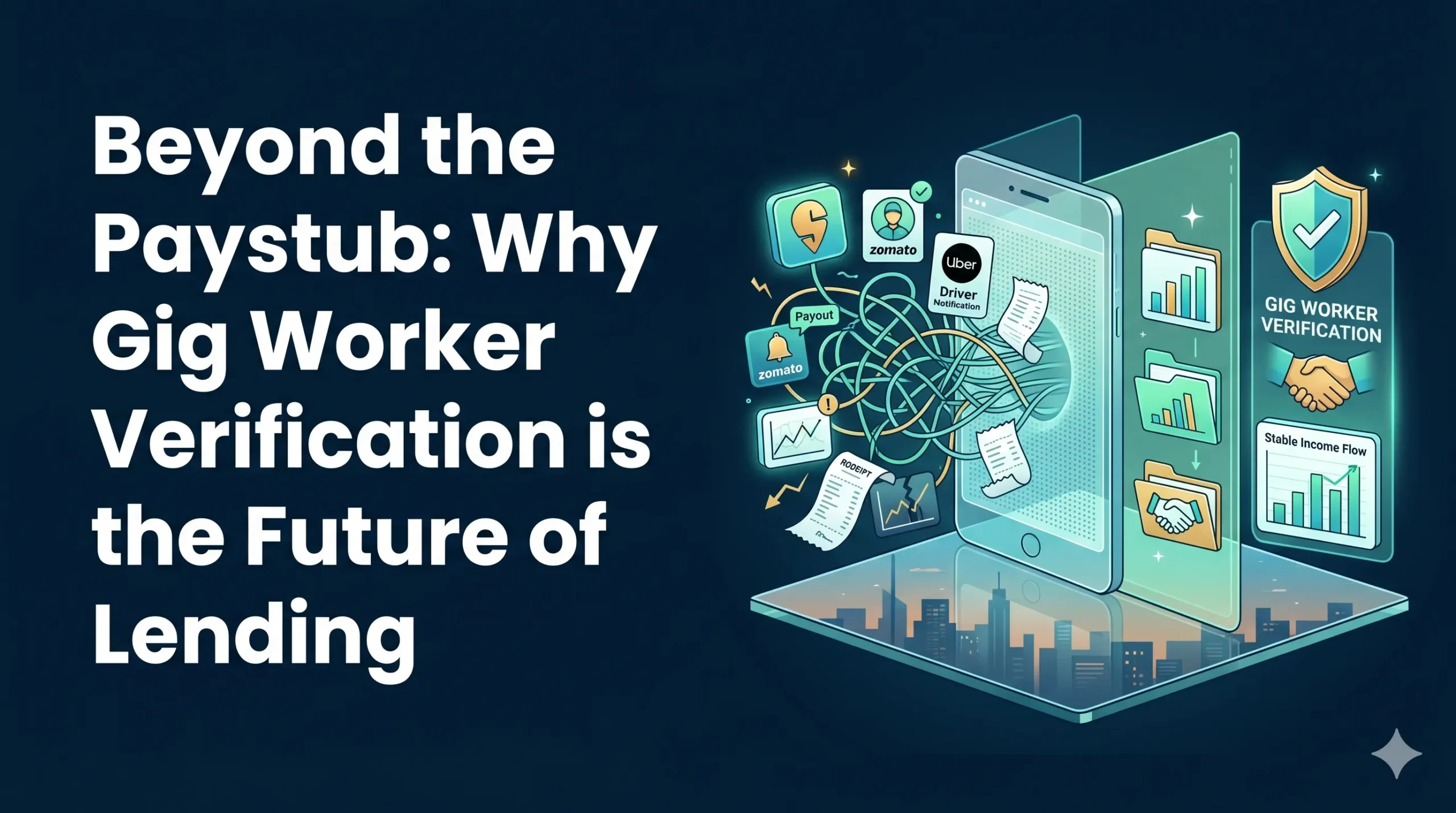
The workforce is shifting rapidly, but traditional credit underwriting often feels stuck in the era of the 9-to-5 desk job. While millions of people now earn high incomes through platforms like Swiggy, Zomato, and Uber, they are frequently rejected by traditional lenders. Why? Because their “paystubs” look like a chaotic stream of micro-transactions rather than a neat monthly salary credit.
To tap into this growing market, lenders must evolve. Modern gig worker verification is no longer just about confirming employment; it is about decoding the rhythm of platform-based earnings to find the stability hidden in the numbers.
The Data Gap: Why Traditional Underwriting Fails Gig Earners
Standard credit scores and salary slips are designed for predictability. However, for a freelancer or delivery partner, cash flow volatility is the norm, not the exception. Traditional models often view this fluctuation as a risk, but in reality, it is simply a different financial language. According to Investopedia, underwriting is the process through which an individual or institution takes on financial risk for a fee, but this process requires clear data to be effective.
When lenders rely solely on rigid document-checking, they miss the opportunity to use alternative data to build a true financial persona. A gig worker might not have a fixed base salary, but they may have consistent weekly payouts that, when viewed through the right lens, reveal a high level of creditworthiness.
👉 Want to see how a Bank statement analyser can simplify your workflow? Try it now!
Reading the Lines: Analyzing Swiggy, Zomato, and Uber Payments
To assess a platform-based earner, you have to look deeper than the total deposit amount. You need to understand how platform-based income is structured.
Transactional Patterns
Analyzing bank statements for gig workers requires a granular approach. You must be able to differentiate between gross earnings, performance-based incentives, and reimbursements for fuel or maintenance. Incentives often tell you more about a worker’s discipline and reliability than the base fare itself.
If you want to explore this further, check out our blog on how to analyze bank statements for business loans.
Income Smoothing
The key to lending in this sector is income smoothing. By analyzing historical platform data, lenders can project a stable monthly average. This helps normalize the peaks and valleys of daily earnings, providing a clearer picture of what the borrower can actually afford in monthly repayments. The Reserve Bank of India (RBI) frequently updates frameworks regarding digital lending to ensure fair practices in these emerging segments.
The New Debt-to-Income Ratio
The traditional debt-to-income ratio (DTI) needs an “agility factor.” Unlike a salaried employee who cannot easily increase their income, a gig worker can often pick up more shifts or “gigs” to cover a financial shortfall. A modern verification process accounts for this earning potential.
Technology to the Rescue: Automated Bank Statement Analysis
Manually sorting through hundreds of micro-payouts is a recipe for error. This is where AI-driven tools become essential. Sophisticated Bank Statement Analysis systems are designed to identify specific platform merchant tags—such as “Uber Payments” or “Zomato Payout”—instantly.
Beyond just identifying the source, automation helps in:
- Detecting “hidden” income from secondary platform hustles.
- Calculating operational liquidity by filtering out business-related expenses.
- Flagging fraudulent or doctored payout screenshots that are common in manual applications.
If you want to explore this further, check out our blog on ITR Analysis for self-employed professionals.
👉 Get actionable insights and Simplify your credit assessment with our Bank statement analyser – Start today.
Risks and Rewards of Lending to the Gig Economy
Every new market comes with risks, primarily fraud detection and the lack of a formal “employer” to verify tenure. However, the rewards for lenders who master gig worker verification are significant. This is a massive, underserved segment of the economy. Lenders who build sustainable growth systems for this demographic today will benefit from long-term compounding growth as the gig economy continues to expand.
Conclusion
The “Swiggy Economy” isn’t a temporary trend; it is a fundamental shift in how people work. Gig worker verification is now a mechanical necessity for any lender aiming for inclusive finance in 2026. By moving toward insight-led analysis, you can turn a “chaotic” bank statement into a clear roadmap for a successful loan.
Strategic lenders don’t wait for the data to become simple; they use better tools to understand the complexity.
👉 Ready to transform your underwriting? Explore our Bank Statement Analysis tool and Get Started today!