Credit risk analysis sits at the heart of every lending decision. Yet, many finance teams still depend on manual reviews of PDFs and spreadsheets to assess borrower risk. This approach is slow, difficult to scale, and increasingly misaligned with today’s data-driven lending environment.
As underwriting volumes rise and decision timelines shrink, automation has become essential. One of the most effective ways to modernize credit assessment is by leveraging a Financial Statement parser to convert raw financial data into structured, actionable insights.
Why Credit Risk Analysis Needs Automation Today
Traditional credit workflows were built for a different era—lower volumes, fewer data sources, and longer approval cycles. That reality no longer exists.
Manual financial statement reviews introduce delays, inconsistencies, and higher operational costs. More importantly, they expose lenders to avoidable risk. Inconsistent interpretations of borrower cash flows or missed anomalies can materially impact portfolio quality.
Regulators and financial institutions alike now emphasize data accuracy and transparency. According to the Reserve Bank of India, robust credit appraisal and monitoring systems are foundational to maintaining financial stability. Automation enables lenders to meet these expectations without adding complexity.
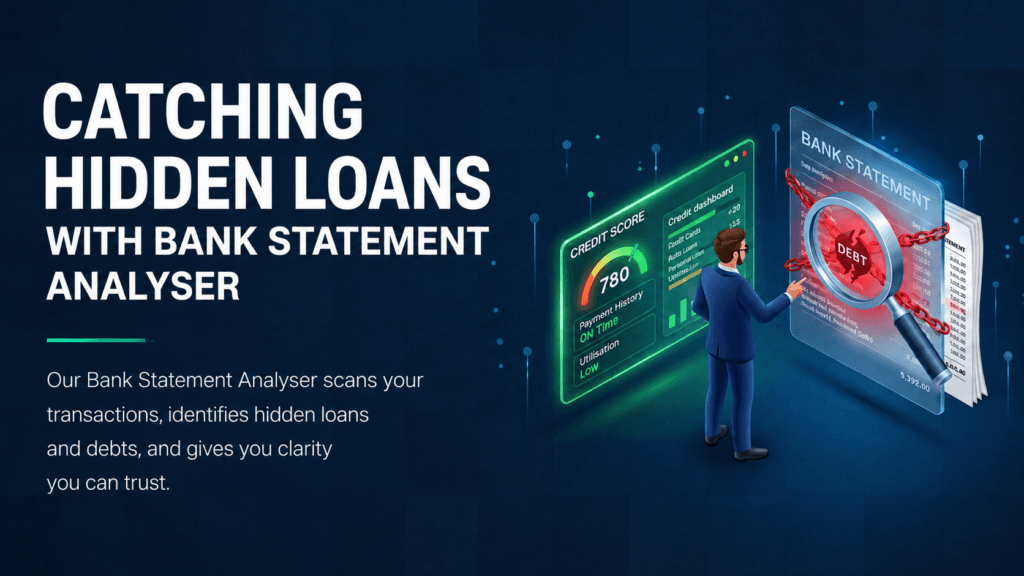
👉 Looking to reduce manual review effort and speed up underwriting? Explore how a Bank Statement Analyser can help you get started.
What Is a Financial Statement Parser?
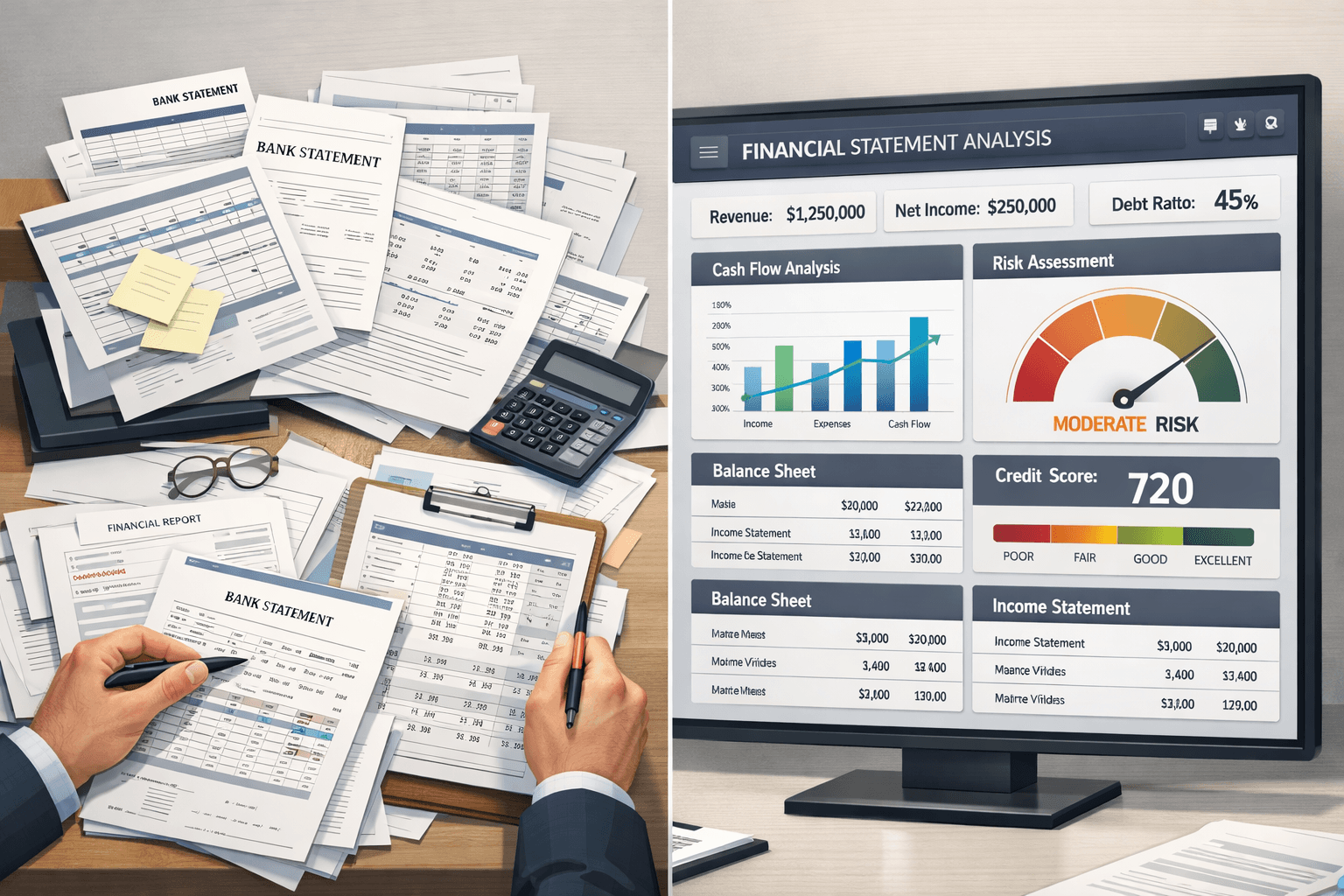
A Financial Statement parser is a technology layer that automatically extracts structured data from unstructured financial documents such as bank statements, balance sheets, and P&L reports.
Instead of analysts manually scanning transactions, the parser identifies, classifies, and standardizes financial data across formats and banks. This structured output feeds directly into credit decisioning systems and risk models.
Core Capabilities That Matter
Modern parsers are designed to support real-world underwriting needs, including:
- Accurate transaction extraction
- Intelligent categorization of inflows and outflows
- Normalization of multi-bank statement formats
- Identification of recurring income and irregular expenses
If you want to explore this further, check out our detailed guide on transaction categorization and why it matters in lending.
How Financial Statement Parsing Automates Credit Risk Analysis
Automation transforms credit risk analysis from a manual task into a streamlined workflow.
First, financial statements are uploaded through a digital interface or API. The parser ingests these files and extracts validated transaction-level data. Next, automated financial statement analysis calculates key metrics such as income consistency, expense volatility, and net cash position.
This data then feeds into underwriting models and credit decisioning systems, enabling faster and more consistent risk assessment.
From an analytical standpoint, this aligns with global best practices in credit evaluation, where cash flow–based assessment is increasingly prioritized over static financial ratios. As explained by Investopedia, cash flow analysis provides a clearer picture of a borrower’s repayment capacity than balance-sheet snapshots alone.
Turning Financial Data into Cash Flow Intelligence
Once statements are parsed, lenders gain a clear, standardized view of borrower cash flows. This enables:
- Consistent borrower financial health assessment
- Early detection of stress signals
- Comparable metrics across applicant segments
Automated Bank Statement Analysis removes subjectivity and ensures every application is evaluated using the same financial lens.
For a deeper perspective, you may find value in our article on best practices for cash flow analysis using bank statement tools.
Benefits for Lenders, NBFCs, and Fintech Platforms
The impact of automation extends beyond speed.
Lenders benefit from improved accuracy, reduced operational overhead, and stronger audit trails. Underwriting teams spend less time validating data and more time evaluating risk exceptions.
Automation also supports portfolio-level insights. By standardizing financial inputs, lenders can better monitor trends, segment risk, and strengthen early warning systems.
To understand how automation can uncover hidden risks, explore our guide on bank statement–based fraud detection.
👉 Want to simplify underwriting while improving decision quality? Try now and see how Cash flow analysis can deliver actionable insights.
Real-World Applications in Modern Lending
Financial Statement parsing is now central to multiple lending models:
- SME and MSME cash flow–based lending
- Digital and instant loan approvals
- Embedded finance platforms
- Account Aggregator–enabled underwriting
For lenders evaluating borrowers before loan approval, understanding inflow and outflow behavior is critical. This is explored further in our blog on reading cash inflows and outflows before applying for a loan.
Conclusion
Credit risk analysis is no longer just about experience and intuition. It is about speed, consistency, and data-backed judgment.
By adopting a Financial Statement parser, finance professionals can automate financial statement analysis, strengthen cash flow assessment, and scale credit operations with confidence. Automation enables better decisions—faster and at lower risk.
For lenders navigating competitive and regulatory pressures, now is the time to modernize credit workflows and build a more resilient underwriting foundation.