In 2026, the “salaried professional” is no longer the only gold standard for lending. With the explosion of the gig economy, freelancing, and digital entrepreneurship, traditional bank statement reviews are failing. If your system sees a deposit from “Stripe” or “Upwork” and labels it as “Miscellaneous,” you aren’t just losing data. you’re losing customers.
Modern lending requires granular transaction categorization. It is the difference between rejecting a “risky” applicant and approving a high-potential borrower.
1. The “Hidden Income” Opportunity
Most basic parsers struggle with non-standard income. Advanced transaction categorization uses machine learning to identify recurring patterns from digital platforms.
- Identifying Side Hustles: Recognizing steady inflows from rental platforms, e-commerce payouts, or consulting fees.
- Separating Reimbursements from Revenue: Automatically flagging business expenses that are paid back, ensuring they don’t artificially inflate “spending” metrics.
By accurately tagging these inflows, a Bank statement analyser allows underwriters to build a realistic picture of a borrower’s Total Monthly Income (TMI).
2. Automating the FOIR and DTI Calculation
The manual process of “spreading” a financial statement—manually marking rent, groceries, and debt—is prone to human error. In 2026, speed is a competitive advantage.
Advanced categorization allows for:
- Instant Debt Identification: Automatically grouping all EMIs, even those from obscure NBPL providers, to calculate an accurate Fixed Obligation to Income Ratio (FOIR).
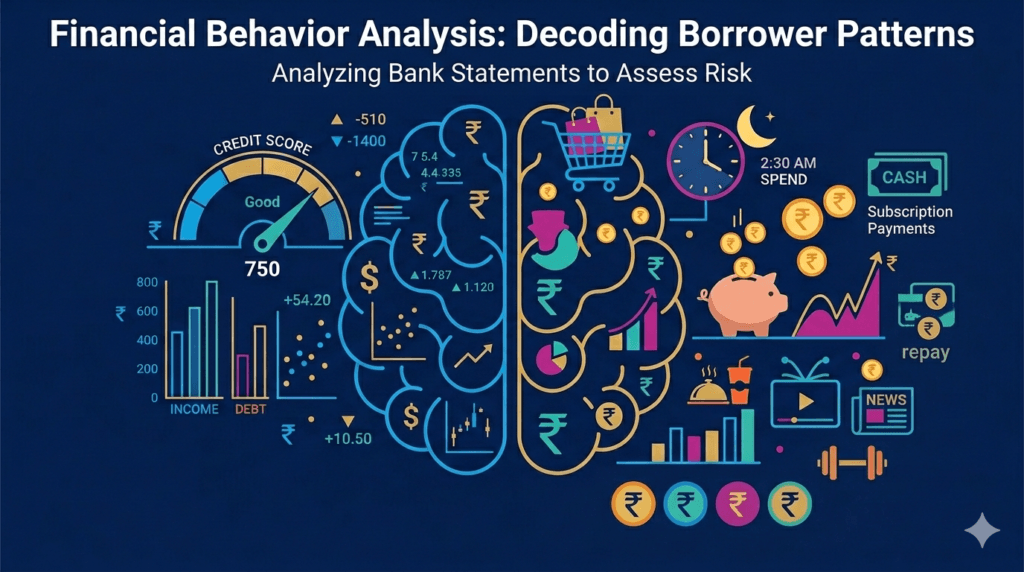
- Lifestyle Profiling: Categorizing discretionary vs. non-discretionary spending. If a borrower spends 40% of their income on “Luxury Travel,” their risk profile differs significantly from someone spending that 40% on “Business Scaling.”
To understand how these features integrate into a modern workflow, see our breakdown of The Essential Features of a Modern Bank Statement Analyzer.
3. Detecting “Circular Trading” and Financial Engineering
Transaction categorization isn’t just about labeling; it’s about forensics. Fraudsters often try to “groom” a bank account by moving money between linked accounts to simulate high turnover.
Smart engines flag:
- Round-Tripping: Funds leaving an account and returning from a related party within a short window.
- Self-Transfers: Flagging “Transfer to Self” to ensure they aren’t counted as genuine business expenses or income.
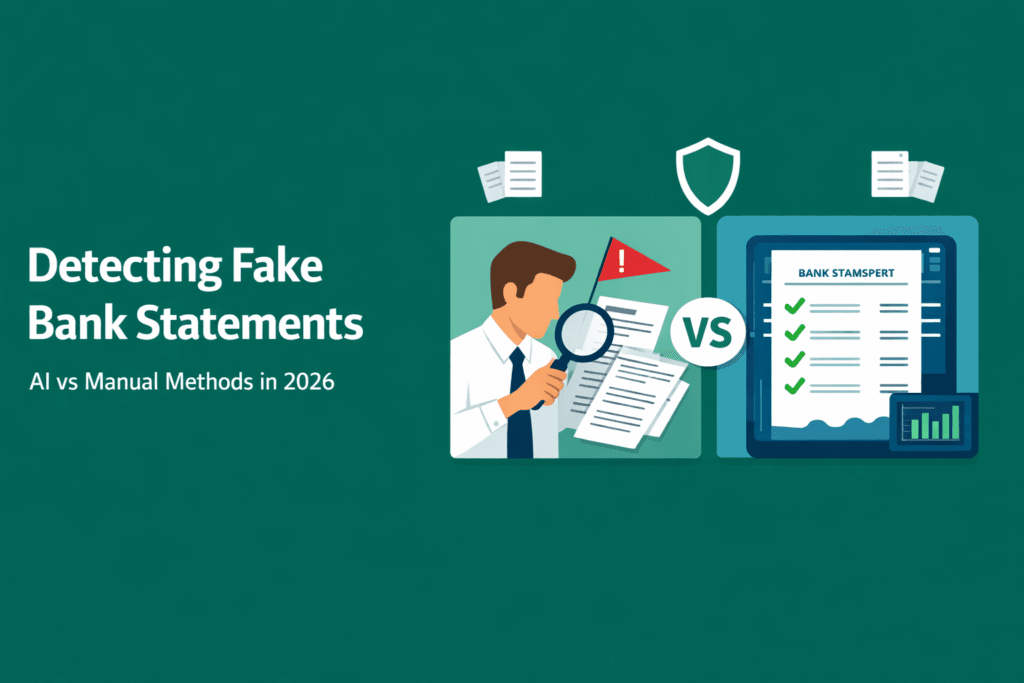
Catching these patterns early is a key component of Bank Statement Fraud Detection, protecting your institution from sophisticated digital scams.
4. Improving Customer Experience (CX)
In the “Instant Loan” era, customers won’t wait 24 hours for a manual review. Automated categorization enables Straight-Through Processing (STP). When transactions are categorized in milliseconds, the loan decision can be delivered while the customer is still on your app.
Industry Trend: Lenders utilizing AI-based categorization have reported a 35% increase in application completion rates due to faster decisioning times.
Summary: The Categorization Advantage
A high-performing categorization engine should provide:
- Merchant Identification: Knowing exactly where the money went (e.g., distinguishing between a “Utility” and “Gambling”).
- Salary Verification: Confirming the source and stability of primary income.
- Behavioural Scoring: Using spending habits to supplement traditional credit data. For more on this, check out our post on Financial Behaviour Analysis.
The Bottom Line
Raw data is noise; categorized data is intelligence. To stay ahead in 2026, fintechs and banks must move beyond simple PDF parsing. You need a Bank statement analyzer tool that understands the story behind every transaction.
Stop guessing and start analyzing.