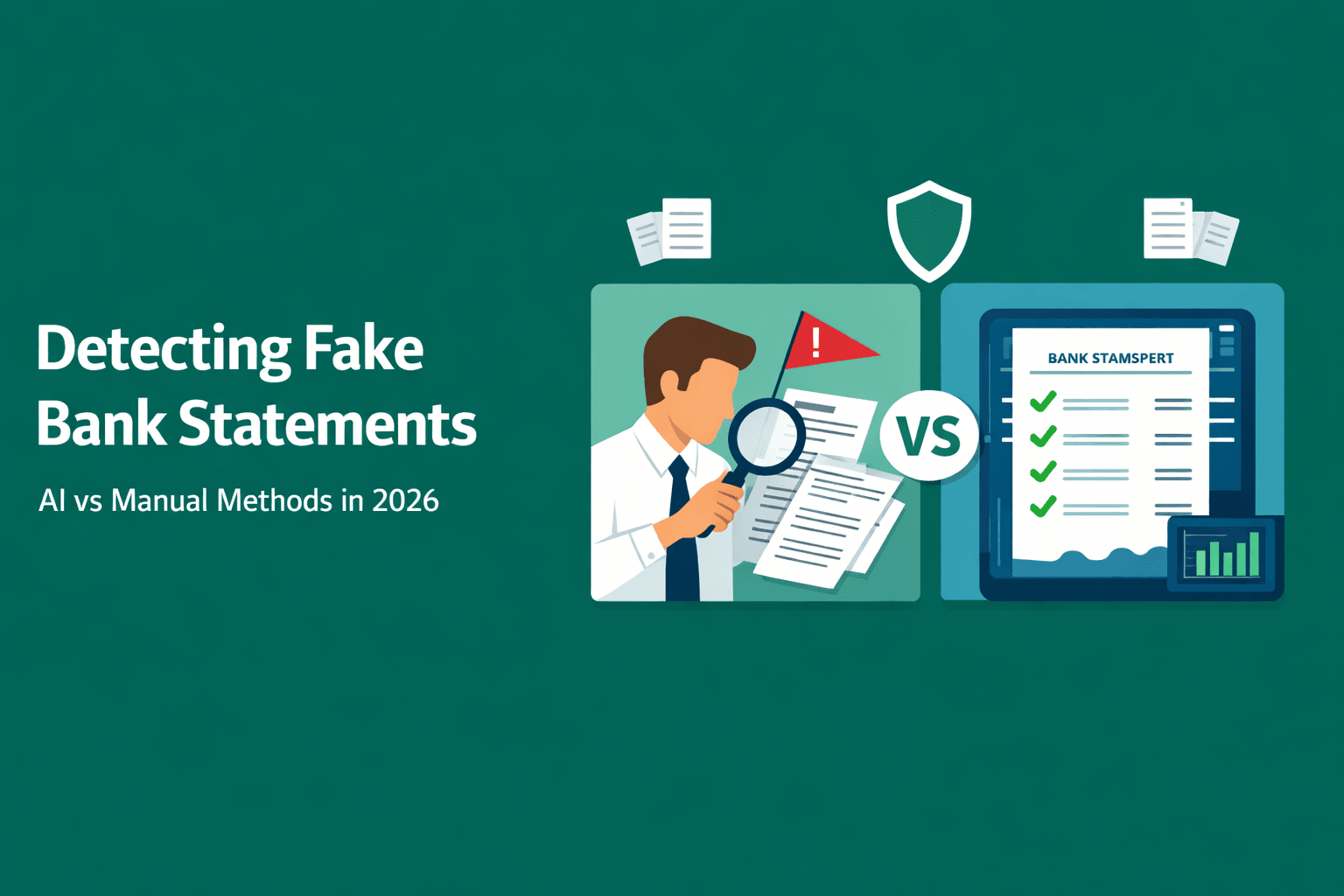
Fake bank statements have become one of the most common tools used in loan fraud, and the problem is only growing. As digital editing tools become more accessible, fraudsters can now manipulate financial documents with alarming precision. For financial institutions, NBFCs, and lenders, robust fake statement detection is no longer optional — it is a core part of responsible lending.
Why Fake Statement Detection Matters More Than Ever
In 2026, loan fraud involving fabricated documents accounts for a significant share of NPA (Non-Performing Asset) growth across India’s lending ecosystem. Borrowers sometimes alter transaction amounts, remove negative entries, or inflate account balances to appear more creditworthy. Without a systematic process for fake statement detection, even experienced analysts can be deceived by well-crafted forgeries.
The stakes are especially high for NBFCs and digital lenders processing hundreds of applications daily. A single fraudulent approval can translate into a default worth lakhs — making detection speed and accuracy both critical.
How Manual Methods Fall Short
Traditional manual review involves a credit analyst physically scanning transaction histories, cross-referencing totals, and checking for inconsistencies in formatting or font. While experienced analysts can catch obvious red flags — like mismatched fonts, irregular spacing, or rounded numbers that look too clean — manual methods are slow, inconsistent, and highly dependent on individual expertise.
Analysts reviewing 50+ statements per day are prone to fatigue-induced errors. More sophisticated forgeries, such as those with consistent fonts, realistic transaction patterns, and subtle balance manipulations, can slip through entirely. Manual bank statement analysis simply cannot scale to meet the demands of modern lending volume.
What AI-Powered Detection Can Do
AI-based fake statement detection works on multiple layers simultaneously. Machine learning models can flag statistical anomalies in transaction patterns — such as unusually round figures, abnormal credit-debit cycles, or timing inconsistencies — that are invisible to the human eye. OCR-based document verification can also detect pixel-level irregularities that suggest tampering in scanned PDFs.
Beyond pattern recognition, AI tools can cross-validate data points across the entire statement — checking that opening and closing balances reconcile correctly, verifying that EMI deductions align with declared loans, and identifying duplicate transactions or suspicious cash deposit clustering. This level of multi-point verification is impossible to replicate manually at scale.
For a deeper understanding of how fraud signals are embedded in transaction data, refer to Pro Analyser’s guide on Securing Financial Transactions: Fraud Detection via Bank Statement Analysis.
Pro Analyser’s Bank Statement Analyser: Built for the Front Lines
Pro Analyser’s bank statement analyser is purpose-built for lenders who need both speed and accuracy in fraud detection. The platform processes statements from all major Indian banks and formats — including PDF, scanned copies, and net banking exports — and delivers a structured analysis report within minutes.
The tool’s fraud detection engine flags high-risk indicators such as circular transactions, sudden balance spikes before loan application dates, and discrepancies between declared income and actual credit entries. With its bank statement analysis capabilities, Pro Analyser goes beyond surface-level review to surface hidden manipulation patterns that manual processes routinely miss.
Unlike generic document tools, Pro Analyser’s bank statement analyzer is trained on real lending data from the Indian market, making it highly attuned to the fraud patterns common in domestic NBFC and DSA workflows. It is trusted by lending institutions across India to act as a first line of defence against fraudulent applications.
To understand how smart tools are being used to prevent loan fraud in practice, explore: Prevent Loan Fraud with Smart Bank Statement Analyser Tool.
AI vs Manual: A Side-by-Side Reality Check
The core difference between AI and manual methods is not just speed — it is the depth and consistency of analysis. A human analyst might take 20–30 minutes per statement and still miss a well-crafted fake. Pro Analyser’s AI engine processes the same document in under two minutes and checks hundreds of validation parameters simultaneously.
Manual review relies on the analyst’s experience and awareness of current fraud techniques, which means knowledge gaps directly become risk gaps. AI models, by contrast, are continuously updated with new fraud signatures, ensuring that emerging manipulation tactics are caught before they become widespread vulnerabilities in a lender’s portfolio.
For a comprehensive overview of how automated analysis compares to manual review in the lending context, this blog on Bank Statement Fraud Detection is a valuable resource.
Making the Switch: What Lenders Should Do Now
The evidence in 2026 is clear: manual-only workflows for fake statement detection are a liability. Lenders who have not yet integrated AI-powered verification tools are operating with a blind spot that fraudsters are actively exploiting. The good news is that tools like Pro Analyser are designed for fast onboarding — no complex integration required to get started.
The most effective approach combines AI screening with human oversight. Let AI catch the anomalies at scale, and reserve human judgement for edge cases and final decisions. This hybrid model delivers the best of both worlds — the speed and pattern recognition of AI, combined with the contextual reasoning of an experienced analyst.
Pro Analyser is an AI-powered financial analysis platform helping lenders, NBFCs, and DSAs make smarter, faster credit decisions.