In the fast-paced lending landscape of 2026, speed is the new currency. For Non-Banking Financial Companies (NBFCs), the challenge is no longer just about finding customers, it is about deciding who to trust, and doing it in seconds.
Manual reviews are a relic of the past. Relying on a credit score alone is like looking at a map through a keyhole; you see the destination, but you miss the obstacles. Modern bank statement analysis for NBFCs has evolved into a high-octane engine for growth, turning raw transaction data into a clear story of financial health. According to Statista, the digital lending market continues to hit record highs, making robust automated tools a necessity rather than a luxury.
Beyond the Basics: What Modern Analysis Uncovers
Today’s credit managers need more than just a “closing balance.” They need a deep dive into cash flow analysis for lenders. While a credit bureau score tells you if a borrower has paid their debts, bank statement analysis tells you if they can pay them tomorrow.
AI-driven tools now go beyond the surface to identify:
- True Disposable Income: Distinguishing between one-time windfalls and steady, sustainable revenue.
- Hidden Liabilities: Detecting recurring payments to unorganized lenders or undisclosed EMIs.
- Lifestyle Discipline: Analyzing “spending velocity” to assess repayment capacity.
If you want to explore how to speed up your internal processes, check out our guide on how automated credit appraisal can significantly reduce loan TAT.
👉 Ready to transform your credit desk? Explore how our Bank Statement Analyser can simplify your data extraction today.
Combatting Fraud with AI-Driven Document Analysis
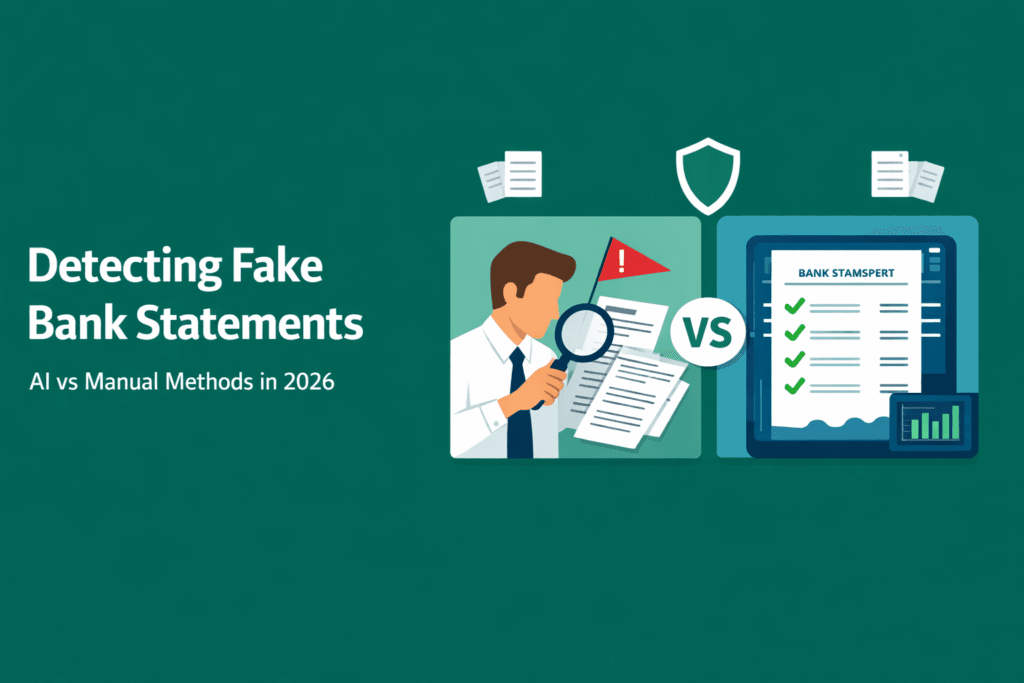
As lending goes digital, so does deception. In 2026, basic PDF editing has become sophisticated, making “doctored” statements a primary risk. This is where fraud detection in digital lending becomes your strongest shield.
A manual eye can easily miss a mismatched font or a slightly altered metadata tag. However, an AI-powered system performs document forensics in real-time. It identifies circular transactions and flags inconsistent transaction patterns that signal a tampered file.
To protect your portfolio, read our deep dive on how to prevent loan fraud with a smart bank statement analyser tool.
Steps to Implement Smarter Cash Flow Analysis
Transitioning to automated credit underwriting doesn’t have to be a multi-year overhaul. Most agile NBFCs follow a three-step integration path:
- Seamless Integration: Connect your analyzer directly to your Loan Origination System (LOS) via API.
- Automated Categorization: Use machine learning to tag transactions as “Rent,” “Salary,” or “Business Revenue.”
- Custom Risk Scoring: Define your own “red-flag” triggers based on the RBI’s latest guidelines on digital lending to ensure compliance and safety.
👉 Try our Bank Statement Analysis software now to get started with automated categorization.
The 2026 Competitive Edge: Efficiency Meets NPA Reduction
Why does this matter? Because the gap between a thriving NBFC and one struggling with non-performing assets (NPAs) is the quality of their data.
By automating your Bank Statement Analyzer workflows, you achieve two critical goals:
- Drastic TAT Reduction: Turnaround time drops from hours to minutes, allowing you to win customers before the competition even opens their email.
- Superior Risk Mitigation: Deep insights help you spot “stress” before it leads to a default, reducing NPA rates by up to 30%.
Conclusion
The shift from retrospective data to predictive intelligence is complete. For NBFCs in 2026, bank statement analysis is the cornerstone of a smart lending strategy. By embracing automation, you don’t just see the numbers—you see the truth behind them.
In a volatile market, the most successful lenders aren’t those who take fewer risks, but those who understand their risks better.
👉 Get started with our Bank Statement Analyser today and simplify your lending decisions!