In the digital lending era, the greatest threat to an NBFC’s loan book isn’t just a “bad” borrower, it’s a “fake” one. As document editing tools become more sophisticated, manual statement fraud detection has become a game of cat and mouse that humans are no longer equipped to win.
For modern lenders, the ability to spot a tampered document is the difference between a healthy interest-earning asset and a total write-off.
for Risk Officers: Visual inspection is no longer enough to catch professional document tampering. Using an automated Bank statement analyzer allows you to verify metadata, validate arithmetic, and detect “round-tripping” in under 60 seconds.
The Rising Cost of Document Fraud in Lending
Document fraud is no longer just about changing a few digits. Today, “First-Party Fraud”, where legitimate individuals manipulate their own statements to appear more creditworthy, is on the rise.
Whether it’s a small business owner hiding a massive existing debt or a salaried individual “inflating” their income, the goal is the same: to bypass your eligibility criteria. When these fraudulent files slip through, your credit underwriting process is compromised from Day Zero.
3 Sophisticated Ways Borrowers Tamper with Statements
To protect your capital, you must understand the tactics fraudsters use:
1. The “Ghost” Balance Inflation
Using PDF editors, applicants simply add a ‘0’ to their closing balance or rewrite their salary credit amount. To the naked eye, the font and alignment look perfect, but the internal “Running Balance” often fails to match the math.
2. Strategic Transaction Deletion
Borrowers often delete “Red Flag” transactions, such as EMI deductions for other loans, bounced cheque charges (ECS returns), or gambling-related payouts. This creates a “clean” but entirely false profile of their financial health.
3. Metadata Manipulation
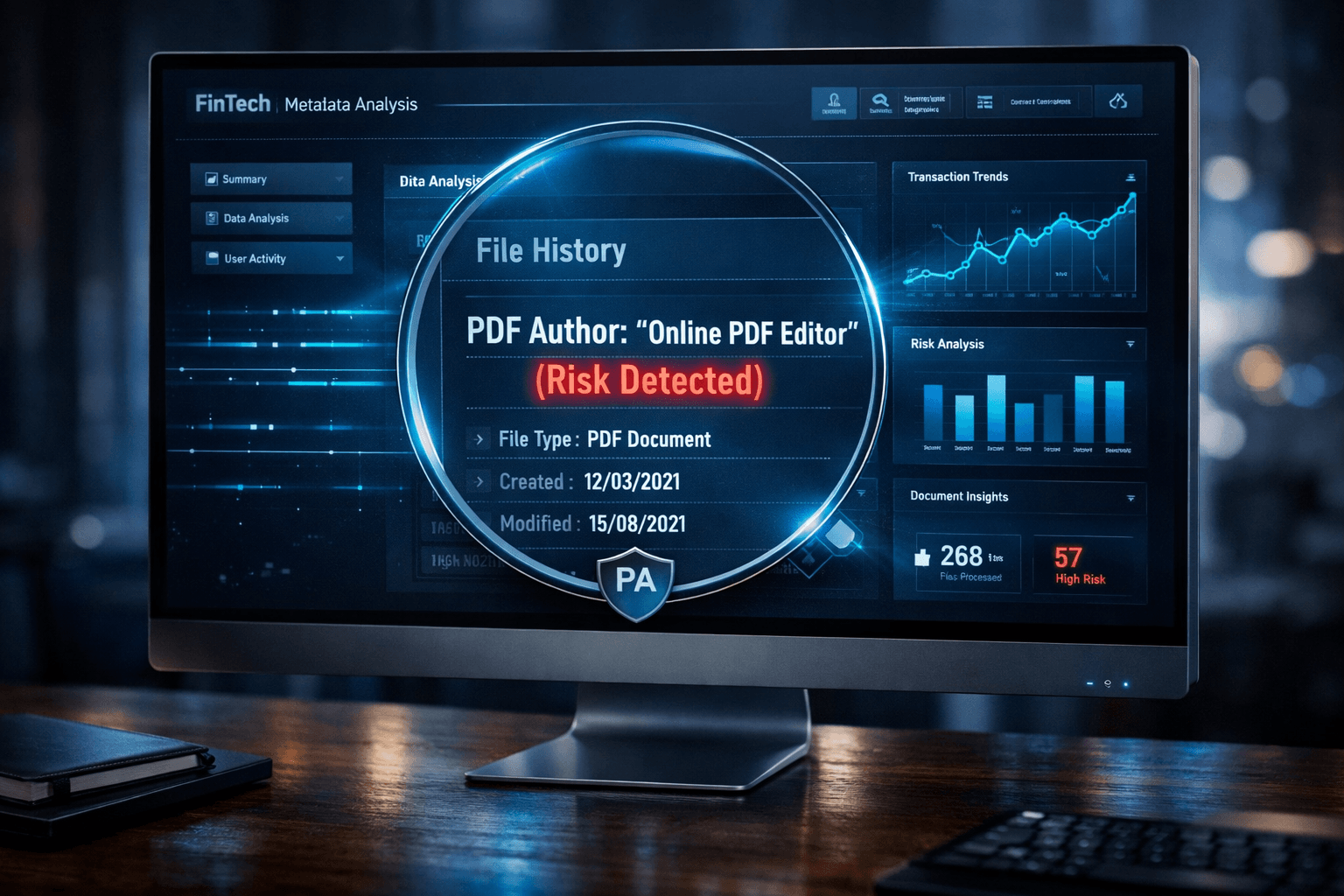
Many fraudulent statements are created using online “JPG to PDF” converters or editing software like Adobe Illustrator. While the document looks like a bank download, its digital footprint tells a different story.
💡 Key Takeaway: Metadata Doesn’t Lie
A human sees a PDF; an automated Bank statement analyser sees the “Author” and “Software” used to create it. If a statement was saved via “Photoshop” instead of a banking portal, it’s an immediate rejection.
How Pro Analyser’s Bank statement analyser Detects Fraud
Our technology moves beyond OCR (Optical Character Recognition) into Forensic Analysis. Here is how we secure your underwriting:
- Arithmetic Cross-Validation: Pro Analyser instantly re-calculates every single transaction. If the opening balance + credits – debits does not equal the closing balance, the file is flagged for fraud.
- Behavioral Pattern Recognition: Our system identifies “Circular Lending” or “Round Tripping.” This is when a borrower moves the same amount of money between two related accounts to create a fake impression of high revenue.
- Font & Alignment Consistency: We scan for microscopic inconsistencies in font size, character spacing, and pixel density, common indicators of “cut-and-paste” fraud.
Manual vs. Automated: The Fraud Detection Gap
| Feature | Manual Visual Review | Pro Analyser Bank statement analyzer |
| Arithmetic Check | Random/Spot checks only | 100% Transaction Validation |
| Metadata Audit | Impossible for humans | Instant Source Verification |
| Pattern Detection | Limited to one page | Multi-month Behavioral Analysis |
| Tamper Alerts | High risk of oversight | Real-time Forensic Flagging |
Protecting Your Loan Book from Day Zero
In the competitive lending landscape, you cannot afford to let fraud stall your growth. By integrating a dedicated Bank statement analyzer into your workflow, you empower your credit team to focus on high-level decisioning rather than forensic detective work.
Don’t wait for the first default to realize your statement fraud detection was insufficient.
Ready to secure your underwriting process? Explore Pro Analyser’s fraud detection capabilities and build a loan book you can trust.
Prevent Fraud Risks early with Pro Analyser today!
Frequently Asked Questions: Statement Fraud Detection
A: Yes. Pro Analyser checks for internal math consistency, metadata discrepancies, and font irregularities that indicate a file has been edited.
A: It identifies hidden risks like circular trading, undisclosed loans, and balance inflation that are invisible during manual reviews.
A: By providing a “Verified” report, it allows lenders to approve legitimate applications faster while automatically rejecting high-risk fraudulent files.