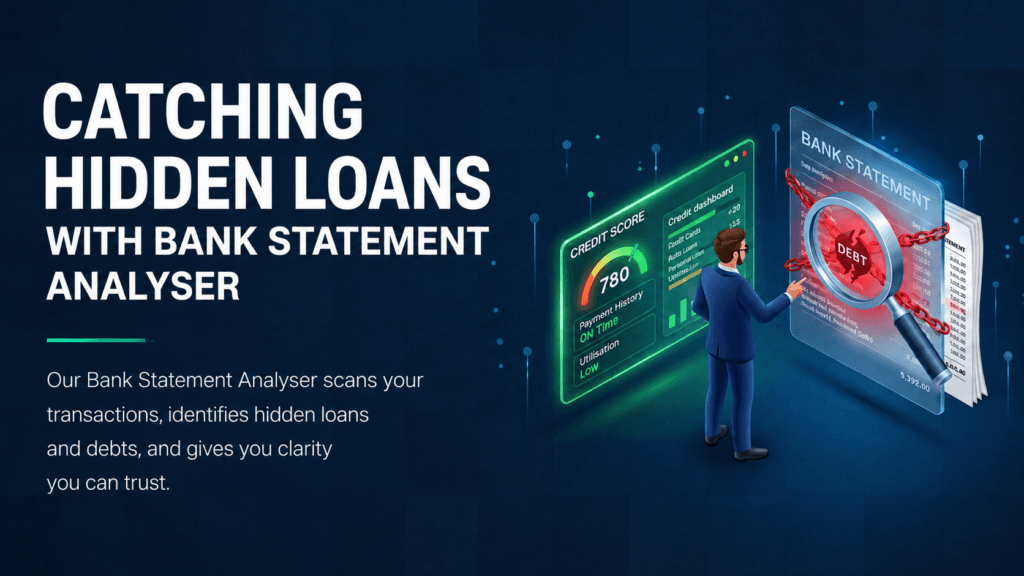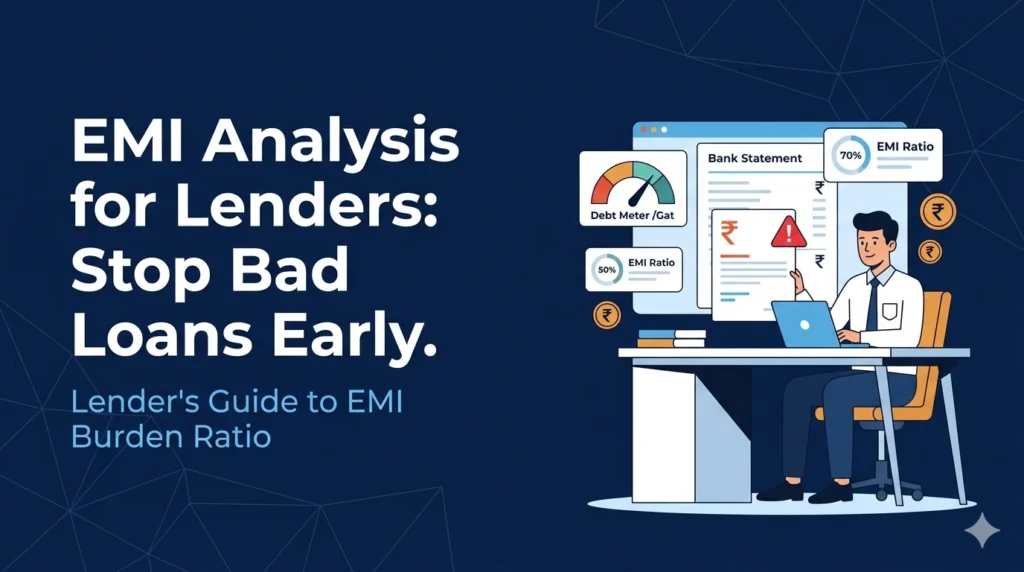

As lending becomes faster and more data-driven, DSAs are expected to do more than collect documents and forward applications. Lenders increasingly rely on cash-flow-based underwriting, where actual banking behavior carries more weight than declared income.
In this environment, Bank Statement Analysis for DSAs has become a foundational step in borrower pre-qualification. It enables DSAs to assess financial readiness early, reduce rejections, and submit applications that align with lender expectations.
This article explains, in an educational and practical manner, how DSAs can use bank statement analysis to pre-qualify borrowers more effectively.
Understanding Pre-Qualification in Modern Lending
Pre-qualification is an early-stage assessment that helps determine whether a borrower is suitable for a specific loan product and amount before the case reaches the lender’s credit desk.
For DSAs, effective pre-qualification means:
- Evaluating repayment capacity using real transaction data
- Identifying risk indicators in advance
- Submitting financially vetted, credit-ready cases
Unlike traditional checks based only on salary slips or declarations, lenders today evaluate actual cash flow behavior reflected in bank statements.
If you want to build a deeper understanding of cash-flow-led decisioning, explore our detailed guide on Cash Flow Assessment for Lending and how lenders interpret surplus and stability.
Why Bank Statement Analysis Is Central to Borrower Pre-Qualification
A bank statement is a financial behavior record. It shows how income is earned, how expenses are managed, and how consistently obligations are met.
For DSAs, bank statement analysis provides insights across three critical dimensions.
Income Stability and Reliability
The key question is not only how much a borrower earns, but how consistently that income is received.
By reviewing bank statements, DSAs can assess:
- Regularity of monthly credits
- Dependence on a single income source
- Sudden income drops or unexplained volatility
Stable inflows generally indicate predictable repayment behavior, which lenders value highly.
Cash Flow and EMI Affordability
A healthy account balance does not always translate into repayment capacity. What matters is the monthly surplus after expenses.
Bank statement analysis helps DSAs evaluate:
- Fixed versus variable expenses
- Existing EMIs and repayment behavior
- Frequency of low or negative balances
This allows DSAs to recommend realistic loan amounts and tenures, reducing the likelihood of rejection or future stress.
Early Identification of Lending Risk Indicators
Many rejections occur due to issues visible in bank statements but discovered too late.
Common indicators include:
- Cheque bounces and penalty charges
- Excessive cash transactions without explanation
- Dependence on short-term borrowings
- Irregular credits in business accounts
Identifying these early allows DSAs to either restructure the case or set the right borrower expectations.
From a regulatory perspective, institutions are increasingly encouraged to adopt data-driven credit assessment practices, as highlighted in RBI publications on digital lending and risk management.
To understand the types of risks lenders flag early, you may also want to read 5 Red Flags to Watch for in Bank Statements Before Approving a Loan.
A Practical Framework: How DSAs Can Pre-Qualify Borrowers Using Bank Statements
A structured approach ensures consistency and scalability.
Step 1: Collect Bank Statements Early
Request 6–12 months of bank statements during initial evaluation, not after lender queries.
Step 2: Review Income Patterns
Check consistency, seasonality, and income source diversity, especially for MSME borrowers.
Step 3: Analyze Expense Behavior
Understand fixed obligations, discretionary spending, and repayment discipline.
Step 4: Flag Potential Risks
Document anomalies that may concern lenders and assess whether they can be explained or mitigated.
Step 5: Take an Informed Decision
Proceed, restructure, suggest an alternate product, or defer the application until financial health improves.
This is the essence of true pre-qualification.
👉 Looking to standardize this workflow? Simplify borrower evaluation with Bank Statement Analyzer designed for DSAs. Explore now.
Impact of Pre-Qualification on Approvals and Lender Confidence
When DSAs submit well-assessed cases:
- Approval ratios improve
- Credit turnaround time reduces
- Lender queries decrease
- Long-term lender trust strengthens
To see how automation directly impacts turnaround time, read How Automated Credit Appraisal Can Reduce Loan TAT.
Consistent pre-qualification positions DSAs as reliable partners rather than mere intermediaries.
Manual vs Automated Bank Statement Analysis for DSAs
Manual review is time-consuming and difficult to scale.
| Manual Review | Automated Analysis |
| High effort | Fast insights |
| Subjective | Rule-based |
| Error-prone | Consistent |
| Limited scalability | High-volume ready |
Using automated tools ensures that every borrower is evaluated using the same criteria lenders apply internally.
👉 Want to move beyond spreadsheets? Get started with a Bank Statement Analyser and streamline your pre-qualification process today.
Conclusion: Education-Driven Pre-Qualification Is the DSA Advantage
As lending standards evolve, DSAs must adapt to data-backed decision-making. Pre-qualification using bank statement analysis is no longer optional—it is essential.
DSAs who understand borrower cash flow submit better cases, reduce rejections, and build stronger lender relationships over time.
👉 Ready to upgrade how you assess borrowers? Explore Bank Statement Analysis with Pro Analyser and start submitting credit-ready cases today.