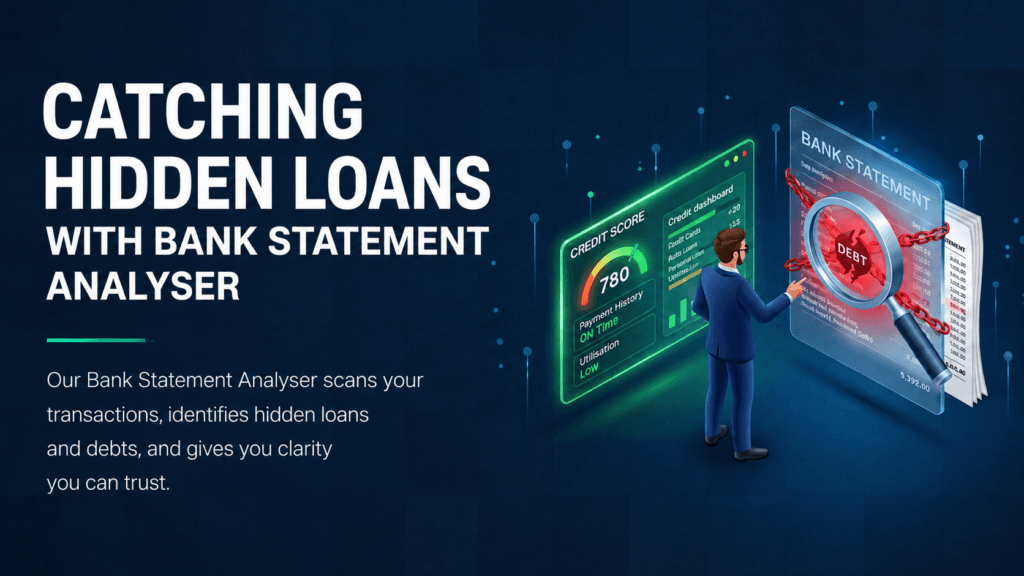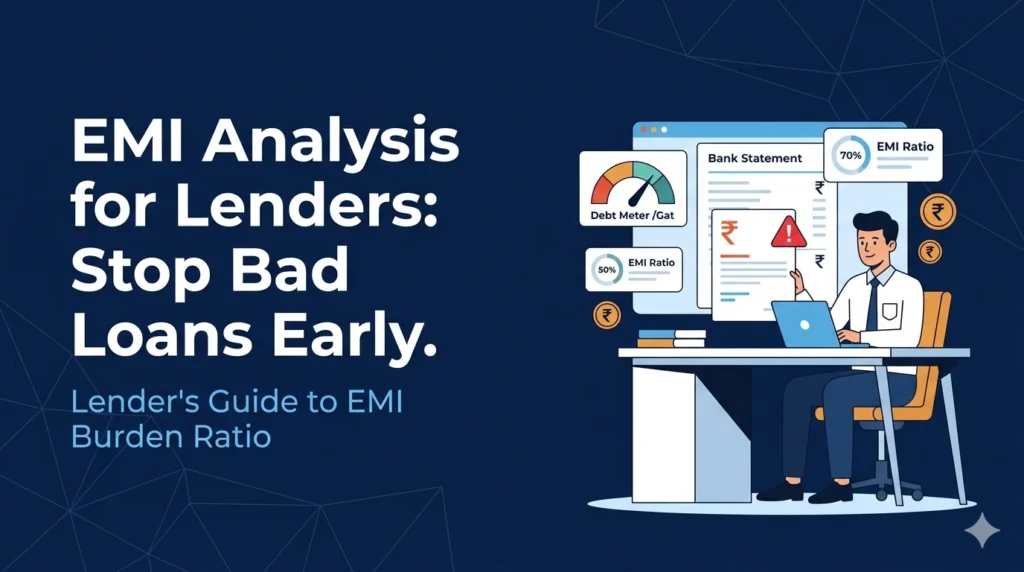

Loan risk analysis has always been the foundation of lending. Every approval, rejection, and pricing decision depends on how accurately a lender can assess risk. Yet, the nature of risk itself has changed.
Borrowers today are more diverse. MSMEs, self-employed professionals, gig workers, and digital businesses do not always fit into traditional credit models. Balance sheets are often delayed. Credit scores lag real financial stress. What lenders increasingly need is visibility into real financial behavior.
This is where modern loan risk analysis shifts from static documents to transaction-level insights and where Pro Analyser plays a critical role.
What Is Loan Risk Analysis in Today’s Lending Environment?
Loan risk analysis is the process of evaluating a borrower’s likelihood of repaying a loan, based on financial capacity, behavioral patterns, and potential risk indicators.
In today’s lending landscape, effective loan risk assessment looks beyond surface-level metrics and focuses on:
- Repayment capacity driven by cash flow
- Income stability and volatility
- Expense behavior and fixed obligations
- Early signs of stress or manipulation
Why Traditional Risk Models Are No Longer Enough
Traditional underwriting relies heavily on balance sheets, financial ratios, and bureau scores. While useful, these inputs are backward-looking and often incomplete especially for MSMEs and self-employed borrowers.
They rarely answer the most important question:
Does this borrower generate enough consistent cash flow to repay the loan?
Limitations of Traditional Loan Risk Assessment Methods
Many lenders still depend on manual reviews and static financials. This approach introduces several challenges.
First, balance sheets capture a moment in time, not day-to-day financial behavior. Second, manually reviewing bank statements is time-consuming and inconsistent. Third, fraud risks such as inflated income or edited PDFs are difficult to detect without automation.
If you want to understand how automation changes this equation, you can explore our comparison of manual vs automated bank statement analysis in lending.
The Shift Toward Data-Driven Loan Risk Analysis
Modern lenders are moving toward transaction-based underwriting, where actual inflows and outflows form the basis of risk evaluation.
Bank statements are central to this shift. They reveal:
- Real income patterns
- Operating expenses
- EMI obligations
- Irregular or circular fund movements
However, raw bank statements usually in PDF format are unstructured. This is where automated bank statement analysis becomes essential.
If you’re curious how lenders convert raw PDFs into structured risk insights, see our article on accurate PDF bank statement conversion.
How Pro Analyser Strengthens Loan Risk Analysis
Pro Analyser acts as a risk intelligence layer in the lending workflow. It converts raw bank statements into structured, decision-ready insights that strengthen loan risk analysis across multiple dimensions.
Explore how Pro Analyser’s Bank Statement Analyzer strengthens loan risk analysis with automated insights.
Cash Flow Analysis for Repayment Capacity
At the core of loan risk analysis is repayment capacity. Pro Analyser performs automated cash flow analysis, calculating:
- Monthly inflows vs outflows
- Net surplus or deficit
- Income consistency across periods
This gives lenders a clear view of whether repayments are supported by real cash generation – not assumptions.
For a deeper understanding of how lenders evaluate inflows, outflows, and surplus trends, explore our guide on cash flow assessment using bank statements.
Circular Transaction Detection
One of the biggest blind spots in loan risk analysis is artificially inflated income. Circular transactions—where funds move across accounts to appear as income—can distort risk evaluation.
Pro Analyser automatically detects circular transaction patterns, helping lenders:
- Identify fund recycling behavior
- Flag income manipulation risks
- Reduce false positives in credit approvals
This capability is particularly valuable in MSME and unsecured lending.
Circular transactions are one of several hidden risk indicators. Learn how lenders uncover such patterns in our blog on bank statements–based fraud detection.
Tampered PDF Detection
Document integrity is a critical yet often overlooked aspect of loan risk analysis. Edited or tampered bank statements can mislead underwriting decisions.
Pro Analyser includes tampered PDF detection, automatically flagging statements that show signs of modification. This protects lenders from document-based fraud before risk models are even applied.
Lending Use Cases Where Pro Analyser Adds Maximum Value
Pro Analyser strengthens loan risk analysis across multiple lending scenarios.
SME and MSME Lending
Transaction-level insights provide a clearer picture of business sustainability than balance sheets alone.
Self-Employed and Gig Worker Loans
Where formal income proofs are limited, bank statement–based analysis becomes the primary risk signal.
Digital and Instant Credit
Automated analysis enables faster decisions without compromising risk controls.
Portfolio Monitoring and Early Risk Detection
Ongoing cash flow analysis helps identify early warning signs and reduces default risk.
Business Impact for Lenders
By strengthening loan risk analysis, Pro Analyser delivers measurable business outcomes:
- Improved underwriting accuracy
- Faster credit decisions
- Lower operational effort
- Reduced fraud exposure
- Scalable risk operations
More importantly, it allows risk teams to focus on judgment and strategy rather than manual data validation.
Ready to improve loan risk analysis at scale? Try Pro Analyser’s Bank Statement Analyzer and simplify risk assessment using automated bank statement analysis.
Conclusion
Loan risk analysis is evolving. Static financials and manual reviews are no longer sufficient in a fast-moving lending environment.
By leveraging transaction-level data from bank statements, lenders gain a more accurate, timely view of borrower risk. Pro Analyser strengthens this process by combining cash flow analysis, circular transaction detection, and tampered PDF checks into a single automated workflow.
For lenders seeking better decisions, lower risk, and scalable operations, modern loan risk analysis starts with intelligent bank statement analysis.