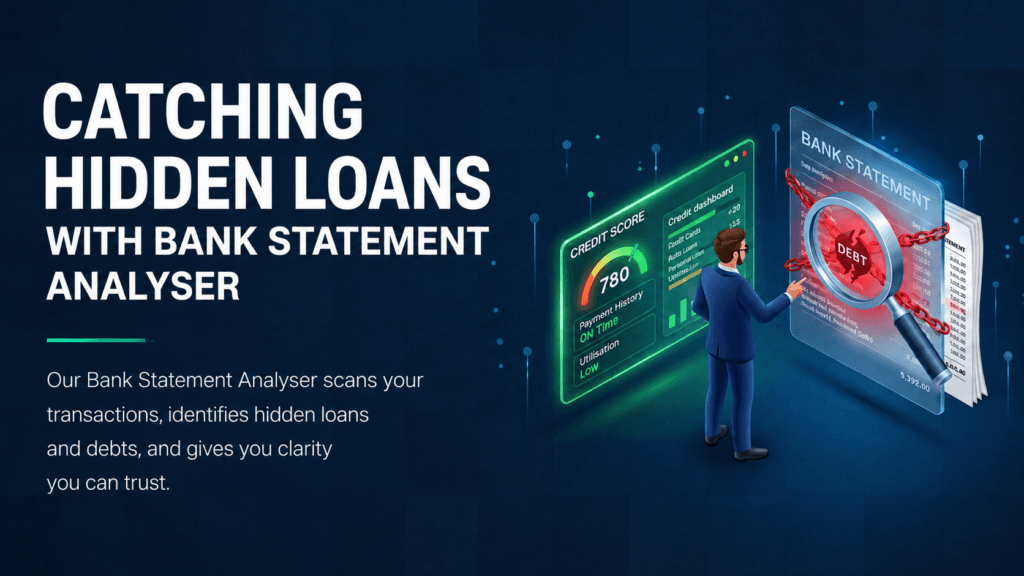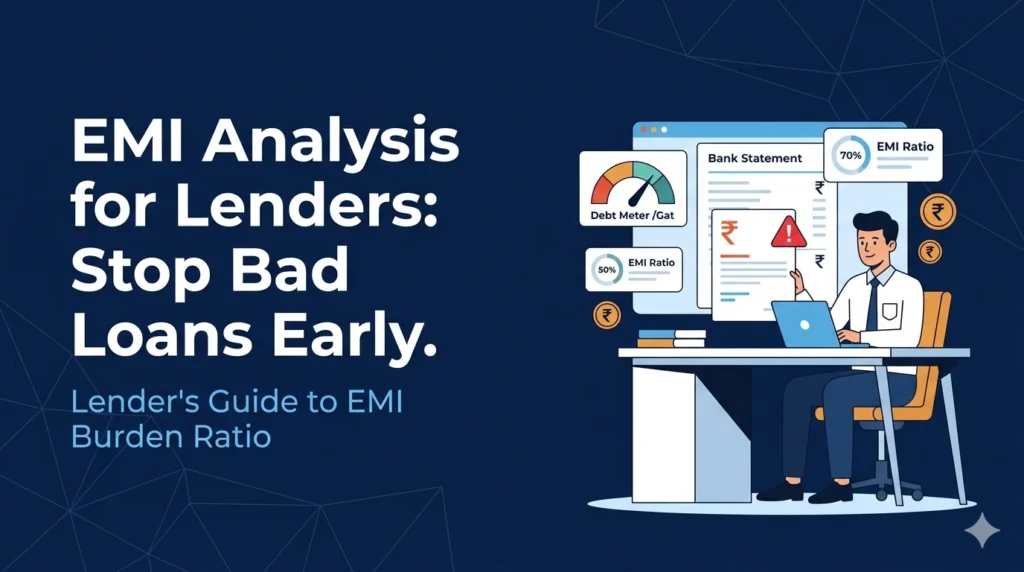

In the high-stakes world of lending, speed is a competitive advantage, but accuracy is a survival requirement. For NBFCs (Non-Banking Financial Companies), the bridge between receiving a loan application and disbursing funds is Bank Account Analysis.
Traditionally, this process was a manual hurdle, underwriters spending hours scrolling through hundreds of pages of PDFs. Today, that manual bottleneck is the silent killer of conversion rates. To scale, modern lenders are shifting toward automated systems to handle credit underwriting and creditworthiness checks with precision.
Strategic Takeaway for Credit Officers:
* Manual bank account analysis is the #1 bottleneck in loan approvals.
* Switching to an automated Bank statement analyzer reduces processing time by 90%.
* Eliminates human error in fraud detection, and provides a structured creditworthiness check in under 60 seconds.
Why Traditional Bank Account Analysis is Failing Modern Lenders
The lending landscape has evolved, but many underwriting workflows are still stuck in the era of spreadsheets. Relying on manual review for bank account analysis introduces three major risks:
- The TAT Trap: High-quality borrowers don’t wait. If your manual analysis takes 24 hours, they’ve already moved to a competitor who can provide an “in-principle” approval in minutes.
- Document Tampering: Sophisticated applicants can edit PDF balances or delete “Red Flag” transactions. To the naked eye, these look legitimate; to a manual process, they are invisible.
- Human Fatigue: A credit officer reviewing their 10th statement of the day is significantly more likely to miss a “bounced cheque” or a “circular lending” pattern.
4 Critical Creditworthiness Checks via Automated Analysis
To ensure sustainable growth, NBFCs must look beyond the final balance. Using Pro Analyser’s Bank statement analyser, credit teams can instantly extract these four mission-critical insights:
1. Average Quarterly Balance (AQB) Trends
Looking at a single day’s balance is a mistake. Borrowers often perform “window dressing”, depositing funds just before applying for a loan. Automated analysis reveals the true liquidity by calculating the AQB over 6 to 12 months.
💡 Key Takeaway: The ‘Window Dressing’ Trap
Borrowers often inflate balances right before applying for a loan. A manual check might miss this, but Pro Analyser’s Bank statement analyser identifies AQB (Average Quarterly Balance) trends instantly to reveal the true liquidity of the applicant.
2. Bounced Cheques & ECS Returns
A high frequency of ECS returns is the strongest predictor of future default. Automated tools flag these “Red Flags” immediately, allowing underwriters to reject high-risk files without wasting time on a full review.
3. Revenue vs. Repayment Capacity
For B2B and SME loans, the tool categorizes business revenue versus personal transfers. This allows for an accurate calculation of the Debt Service Coverage Ratio (DSCR), ensuring the borrower has the cash flow to support new EMIs.
4. Counterparty Analysis
Is the borrower moving money between related entities to mimic revenue? Automated Bank statement analyzer technology identifies circular trading patterns that would take a human auditor days to uncover.
Manual Review vs. Pro Analyser: The Efficiency Gap
| Feature | Manual Analysis (Legacy) | Pro Analyser’s Bank statement analyzer |
| Speed/TAT | 2–4 Hours per file | Under 60 Seconds |
| Accuracy | Prone to human oversight | 99.9% Data Extraction |
| Fraud Detection | Basic visual check | Advanced Pattern Recognition |
| Scalability | Limited by headcount | Unlimited/Batch Processing |
Improving Loan Approvals with Structured Data
The true value of a Bank statement analyser isn’t just in reading data—it’s in structuring it. Pro Analyser converts messy, multi-bank PDFs into a unified Excel or JSON report. This allows NBFCs to:
- Standardize the underwriting process across different branches.
- Integrate analysis data directly into their Loan Management System (LMS).
- Focus human expertise on “decisioning” rather than “data entry.”
5 Red Flags in a Borrower’s Statement:
- Circular Lending: Funds moving between related parties.
- High Cheque Bounce Ratio: Predictor of liquidity crisis.
- Frequent Cash Withdrawals: Unexplained B2B hits.
- EMI Irregularity: Hidden existing loan defaults.
- Dwindling EOM Balance: Indicates a hand-to-mouth cycle.
Frequently Asked Questions: Bank Account Analysis for NBFCs
It accelerates loan approvals, improves risk assessment accuracy, and detects fraud patterns (like circular trading) that manual reviews often miss.
It converts unstructured PDF data into categorized financial insights, allowing underwriters to focus on decision-making rather than data entry.
Yes. Advanced tools like Pro Analyser use digital footprints and data consistency checks to flag potential document manipulation.
Automate credit assessment with Pro Analyser today!
Conclusion: Build a Data-First Underwriting Engine
In a market where NBFCs are judged on their ability to disburse loans quickly and safely, manual bank account analysis is a liability. By adopting Pro Analyser, your credit team can move from “checking” to “analysing,” ensuring that every loan approval is backed by verified, deep-dive data.
Ready to slash your TAT and improve your creditworthiness checks? Explore how our Bank statement analyser can modernize your credit operations today.