
Lending Using Bank Statements
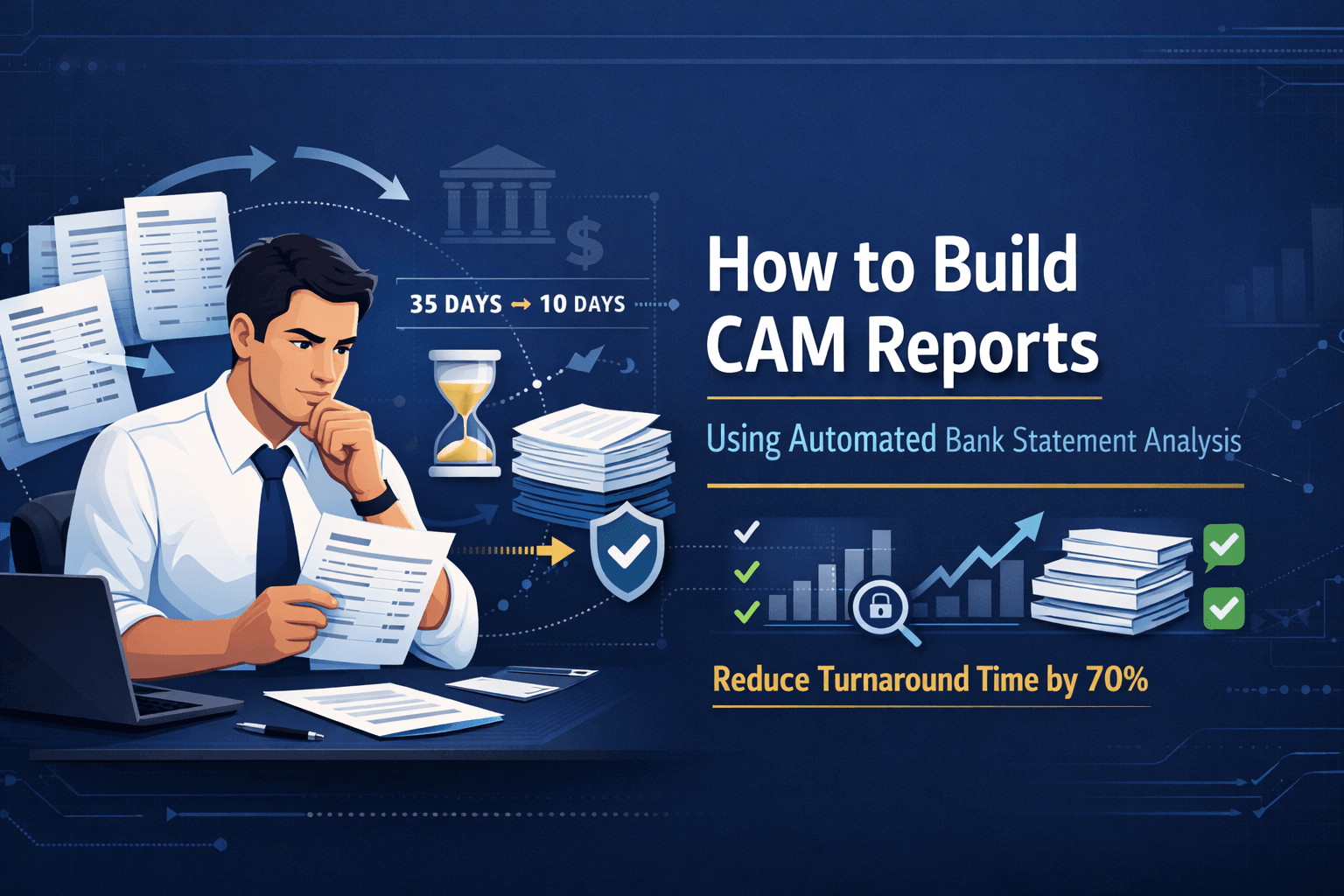
How to Build CAM Reports Using Automated Bank Statement Analysis
What is CAM Report? A CAM report, or Credit Appraisal Memorandum, is a comprehensive document that forms the backbone of lending decisions. Banks and financial institutions use CAM reports to systematically evaluate a borrower’s creditworthiness before approving loans. It serves as a structured “source of truth,” consolidating borrower financials, risk factors, collateral details, and repayment
How DSAs Can Use Bank Statement Analysis to Improve Conversion Rates
Direct Selling Agents (DSAs) face immense pressure to convert leads into successful loan approvals. With average DSA conversion rates hovering around 15-25%, there’s enormous untapped potential. The secret weapon? Bank statement analysis. Modern bank statement analyser tools are transforming how DSAs approach loan applications, turning tedious manual processes into streamlined workflows. By leveraging advanced bank
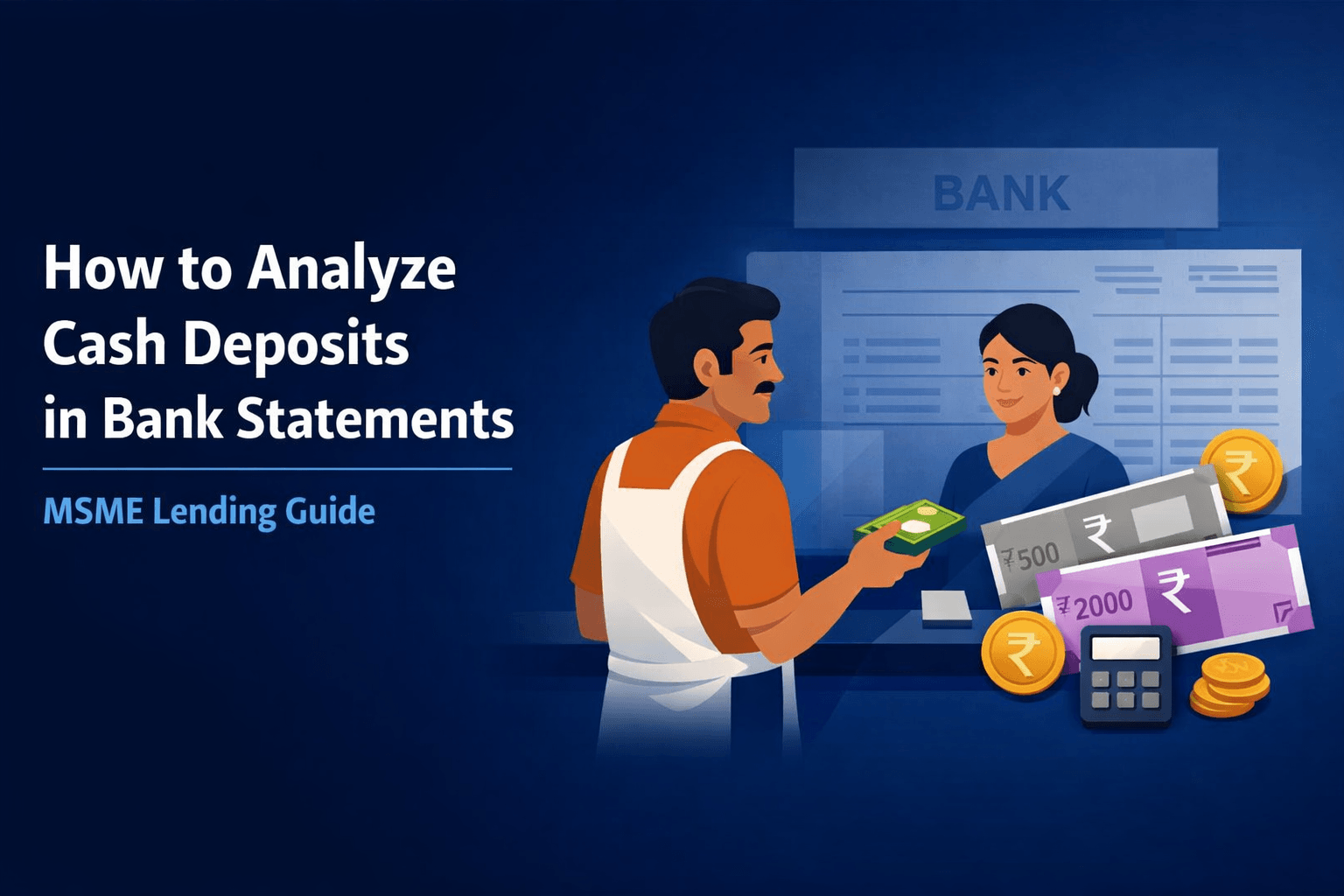
How to Analyse Cash Deposits in Bank Statements for MSME Lending
For Micro, Small, and Medium Enterprises (MSMEs) in India, cash remains king. From neighborhood kirana stores to local manufacturers, millions of businesses still operate predominantly in cash. For lenders, this presents a unique challenge: how do you accurately assess creditworthiness when a significant portion of income arrives as cash deposits in bank statements? Cash deposit
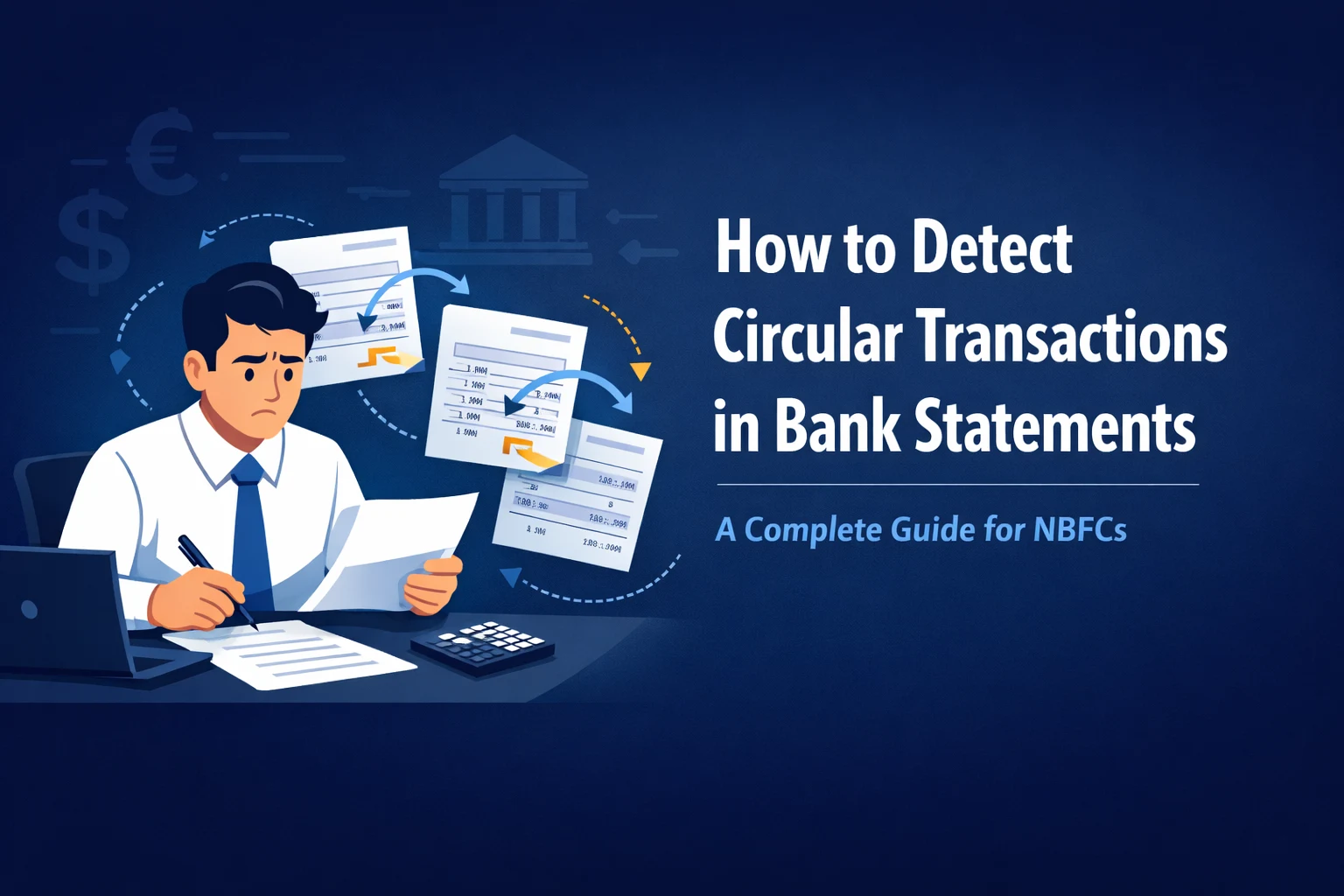
How to Detect Circular Transactions in Bank Statements: A Guide for NBFCs
In India’s rapidly evolving digital lending ecosystem, Non-Banking Financial Companies (NBFCs) face a sophisticated threat: circular transactions. These orchestrated money flows create the illusion of legitimate business activity or income, deceiving underwriters and artificially inflating creditworthiness. Unlike simple document tampering, circular transactions involve real money movements making them extremely difficult to identify through manual verification.
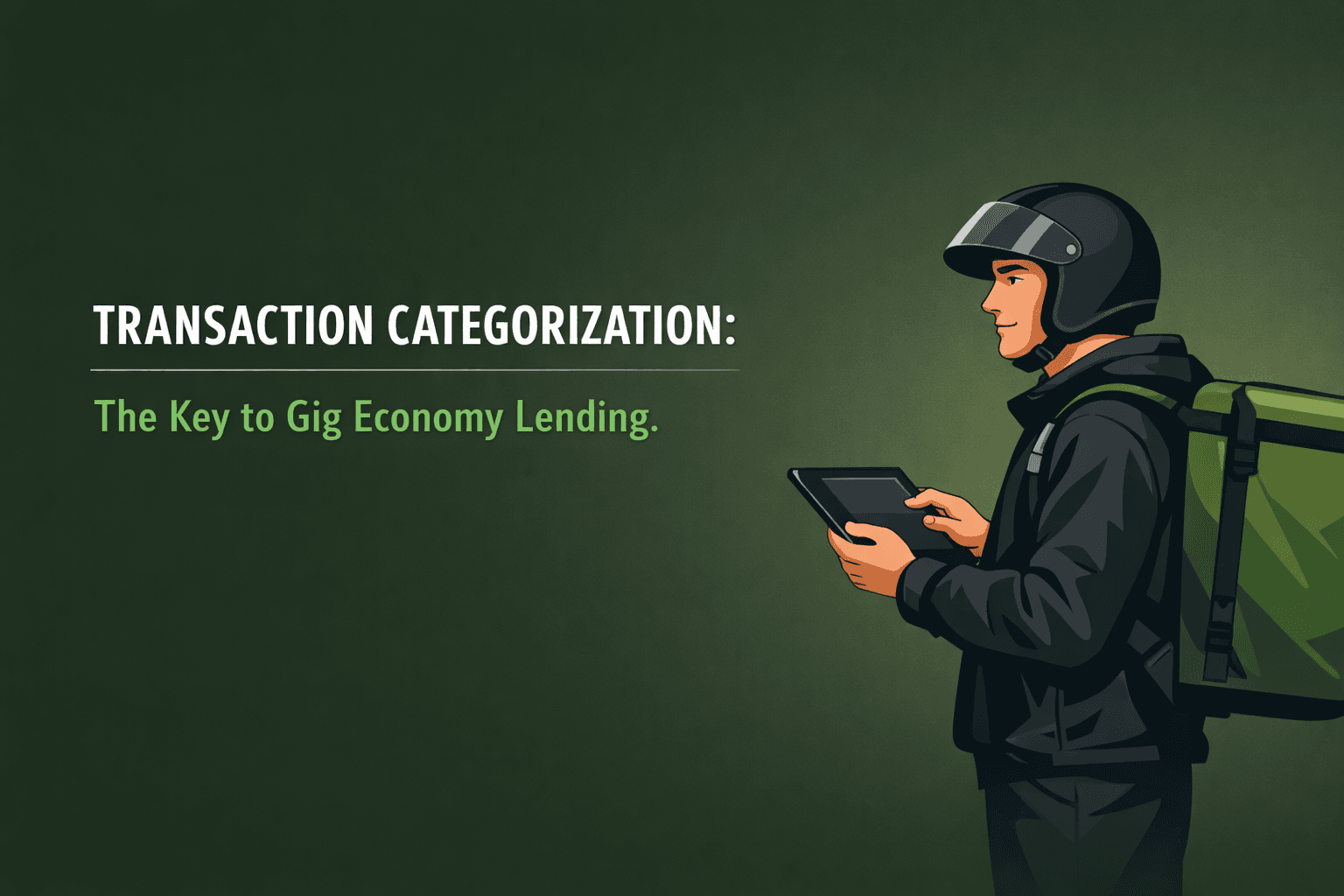
Why Advanced Transaction Categorization is the Secret to Underwriting the Gig Economy
In 2026, the “salaried professional” is no longer the only gold standard for lending. With the explosion of the gig economy, freelancing, and digital entrepreneurship, traditional bank statement reviews are failing. If your system sees a deposit from “Stripe” or “Upwork” and labels it as “Miscellaneous,” you aren’t just losing data. you’re losing customers. Modern
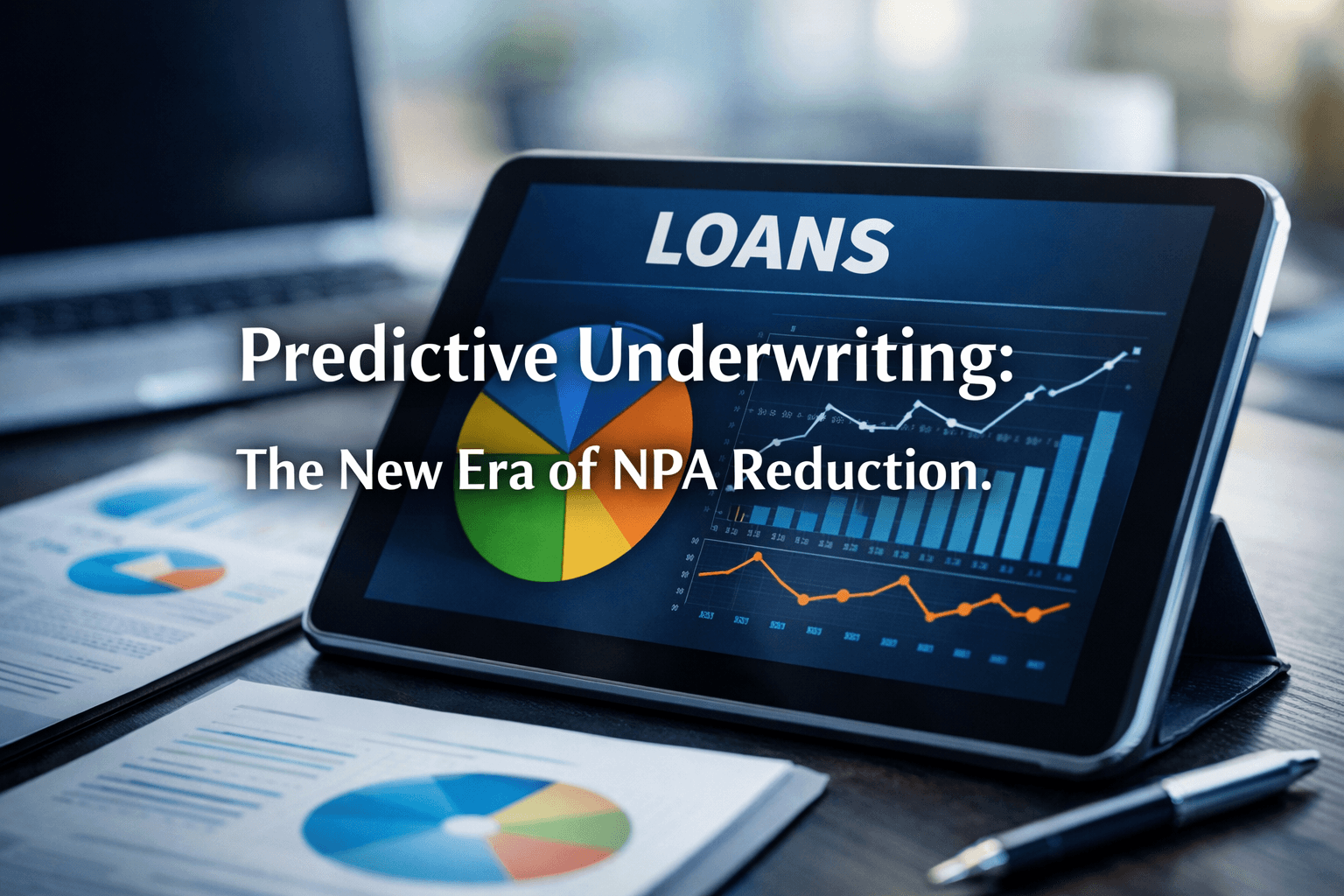
From Reactive to Predictive: How Automated Analysis Drives NPA Reduction in 2026
In the competitive lending landscape of 2026, the margin for error has vanished. While digital lending volumes are at an all-time high, the challenge of maintaining asset quality remains the top priority for Banks and NBFCs. The secret to sustainable growth isn’t just lending more. it’s lending smarter. The most effective strategy for NPA reduction
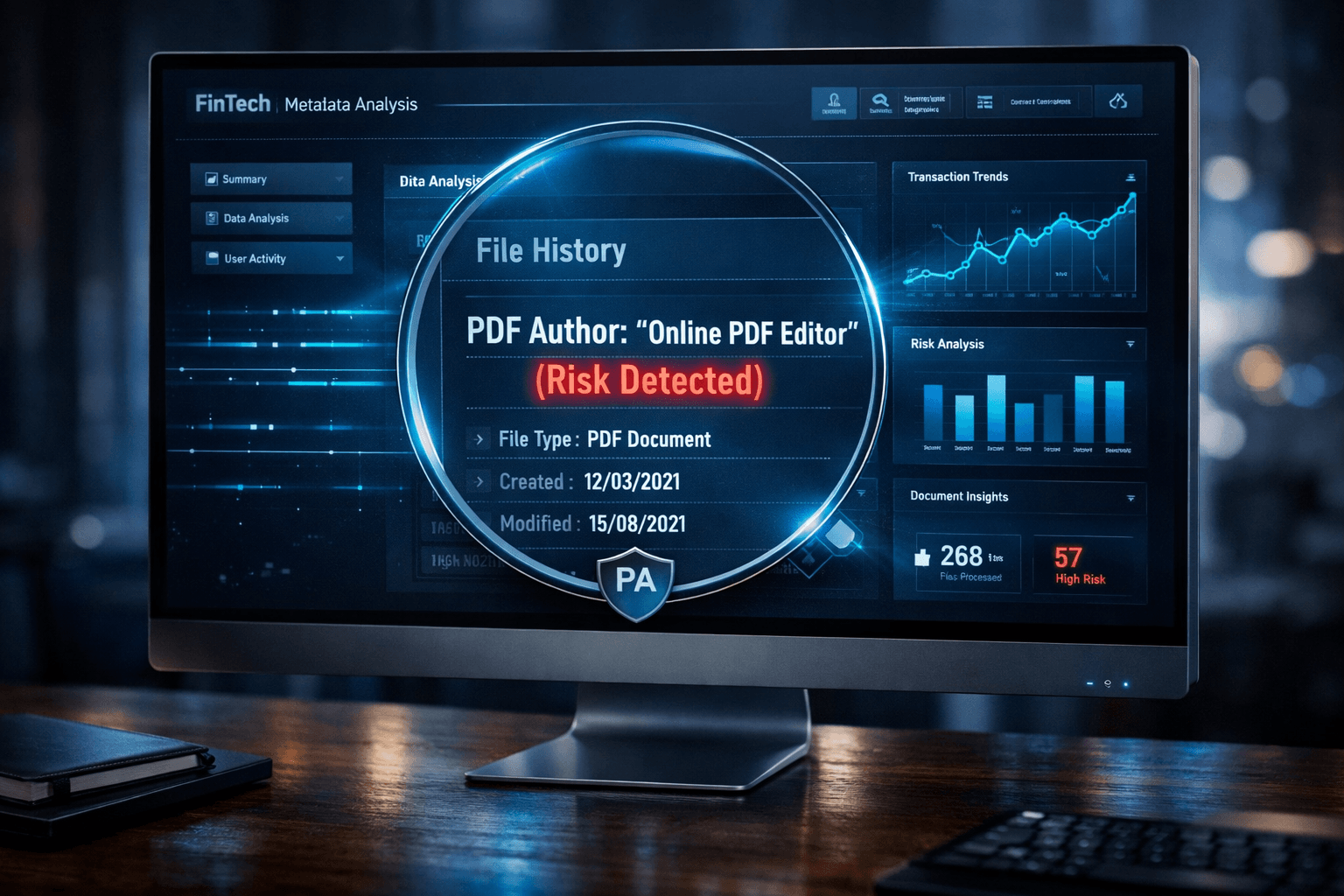
Statement Fraud Detection: Protect Your Lending Business
In the digital lending era, the greatest threat to an NBFC’s loan book isn’t just a “bad” borrower, it’s a “fake” one. As document editing tools become more sophisticated, manual statement fraud detection has become a game of cat and mouse that humans are no longer equipped to win. For modern lenders, the ability to

Optimizing Credit Underwriting: The Strategic Role of Bank Account Analysis in NBFCs
In the high-stakes world of lending, speed is a competitive advantage, but accuracy is a survival requirement. For NBFCs (Non-Banking Financial Companies), the bridge between receiving a loan application and disbursing funds is Bank Account Analysis. Traditionally, this process was a manual hurdle, underwriters spending hours scrolling through hundreds of pages of PDFs. Today, that

Bank Statement Analysis for DSAs: How to Pre-Qualify Borrowers Effectively
As lending becomes faster and more data-driven, DSAs are expected to do more than collect documents and forward applications. Lenders increasingly rely on cash-flow-based underwriting, where actual banking behavior carries more weight than declared income. In this environment, Bank Statement Analysis for DSAs has become a foundational step in borrower pre-qualification. It enables DSAs to
Master Your Lending: The 2026 Guide to Bank Statement Analysis for NBFCs
In the fast-paced lending landscape of 2026, speed is the new currency. For Non-Banking Financial Companies (NBFCs), the challenge is no longer just about finding customers, it is about deciding who to trust, and doing it in seconds. Manual reviews are a relic of the past. Relying on a credit score alone is like looking